
Course:
Chemistry – 0570

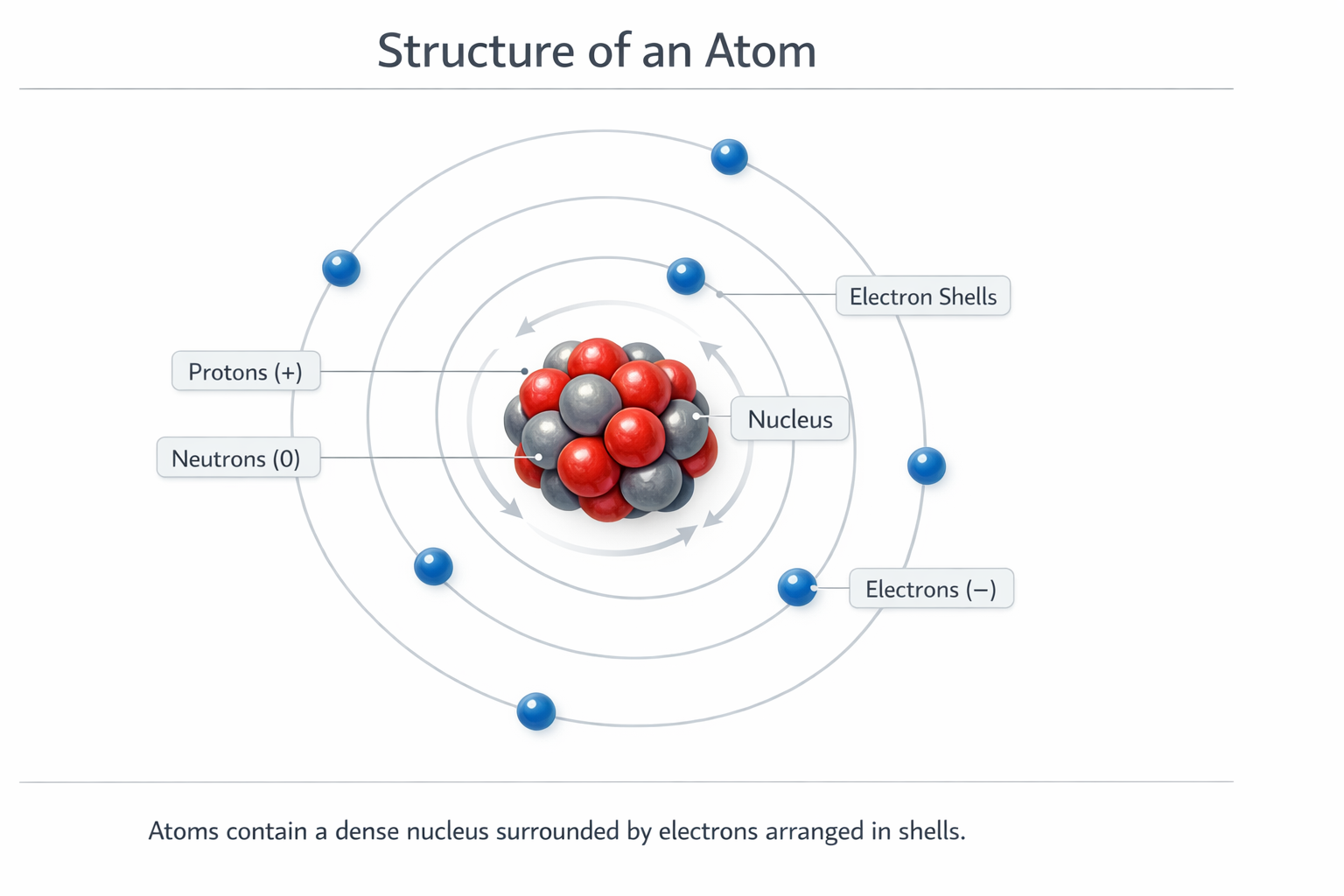
Atoms are the smallest units of elements and consist of three subatomic particles: protons, neutrons and electrons. Protons and neutrons are located in the nucleus at the centre of the atom, while electrons move around the nucleus in energy levels called shells.
The atomic number represents the number of protons in the nucleus and identifies the element. The mass numberrepresents the total number of protons and neutrons in the nucleus. Atomic symbols are used to represent these values and help determine the number of neutrons in an atom.
Electrons are arranged in shells around the nucleus according to specific patterns. The electrons in the outermost shell are known as valence electrons and determine how atoms interact with other atoms. Atoms often gain, lose or share electrons in order to achieve a stable noble gas configuration.
Atoms of the same element can have different numbers of neutrons. These forms are known as isotopes. Examples include isotopes of hydrogen, carbon and chlorine.
An atom is the smallest particle of an element that retains the chemical properties of that element.
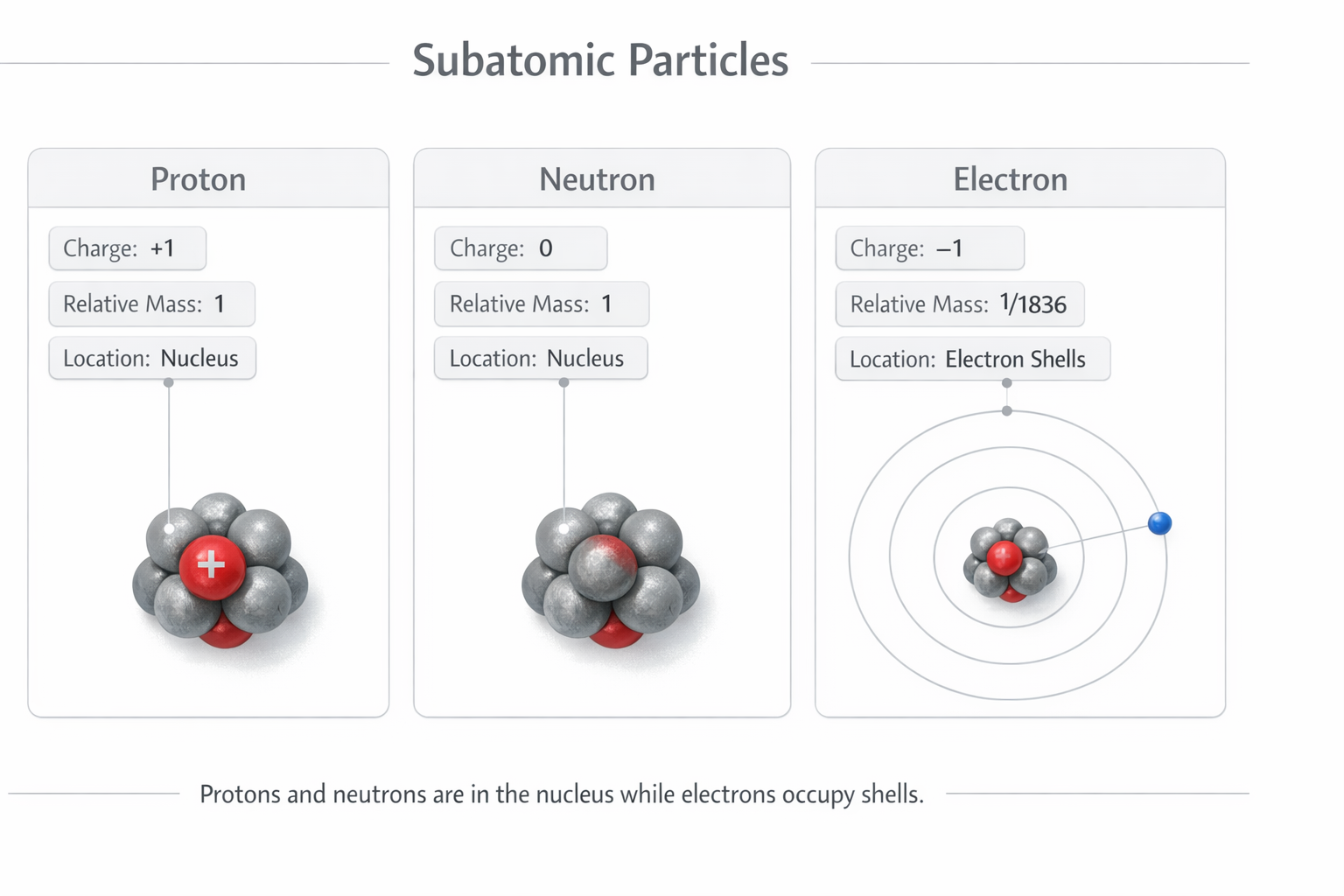
Atoms consist of three main subatomic particles:
• Protons
• Neutrons
• Electrons
These particles are arranged in two main regions of the atom.
The nucleus is located at the centre of the atom and contains:
• protons
• neutrons
The nucleus contains most of the mass of the atom.
Electrons move around the nucleus in energy levels called shells.
Key points:
• protons are positively charged
• electrons are negatively charged
• neutrons have no charge
Electrons have a much smaller mass compared with protons and neutrons.
The atomic number is the number of protons in the nucleus of an atom.
Atomic number determines:
• the identity of the element
• the number of electrons in a neutral atom
Carbon has atomic number 6
Therefore carbon contains:
6 protons
6 electrons
The mass number is the total number of protons and neutrons in the nucleus.
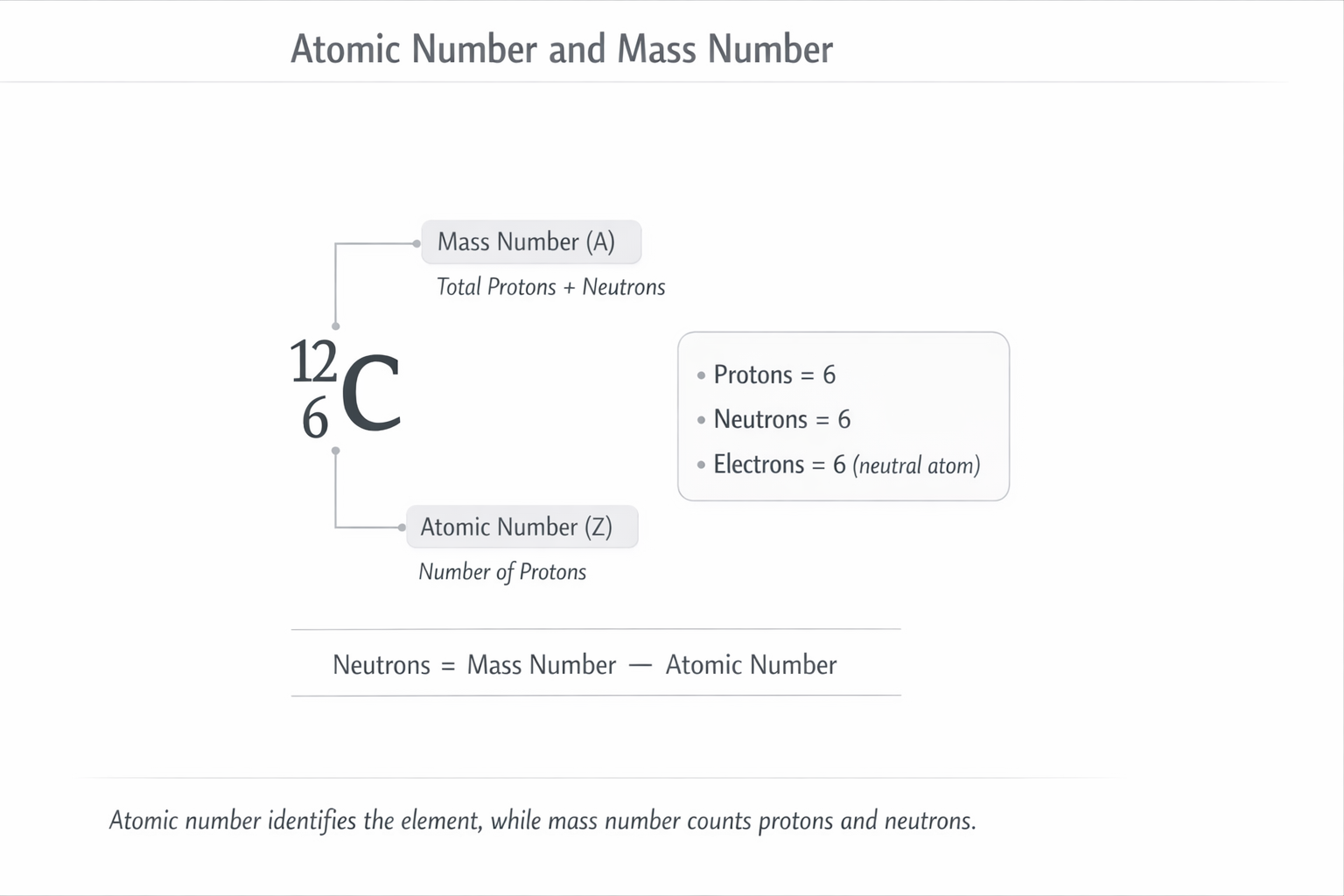
Mass number = protons + neutrons
An atom with
6 protons
6 neutrons
Mass number = 12
Atoms are represented using standard notation.
General format:
A
Z X
Where:
A = mass number
Z = atomic number
X = element symbol
¹²₆C
Mass number = 12
Atomic number = 6
Number of neutrons =
Mass number − atomic number
12 − 6 = 6 neutrons
Electrons occupy shells around the nucleus.
For the first 20 elements:
First shell → maximum 2 electrons
Second shell → maximum 8 electrons
Third shell → maximum 8 electrons
Hydrogen → 1
Helium → 2
Carbon → 2,4
Sodium → 2,8,1
Calcium → 2,8,8,2
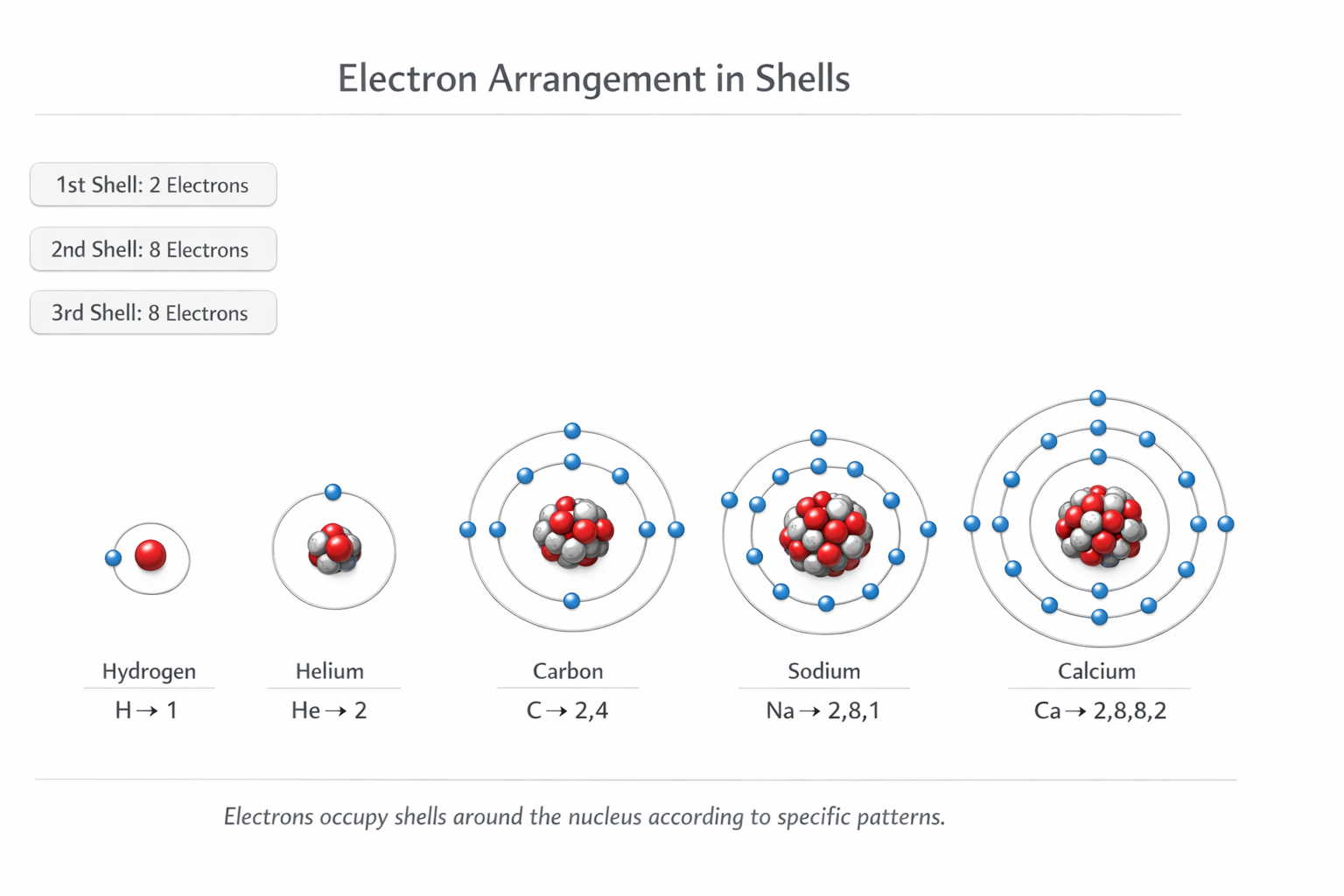
This pattern is known as electron configuration.
Atomic structure diagrams show:
• the nucleus containing protons and neutrons
• electrons arranged in shells
Protons = 11
Electrons = 11
Electron arrangement = 2,8,1
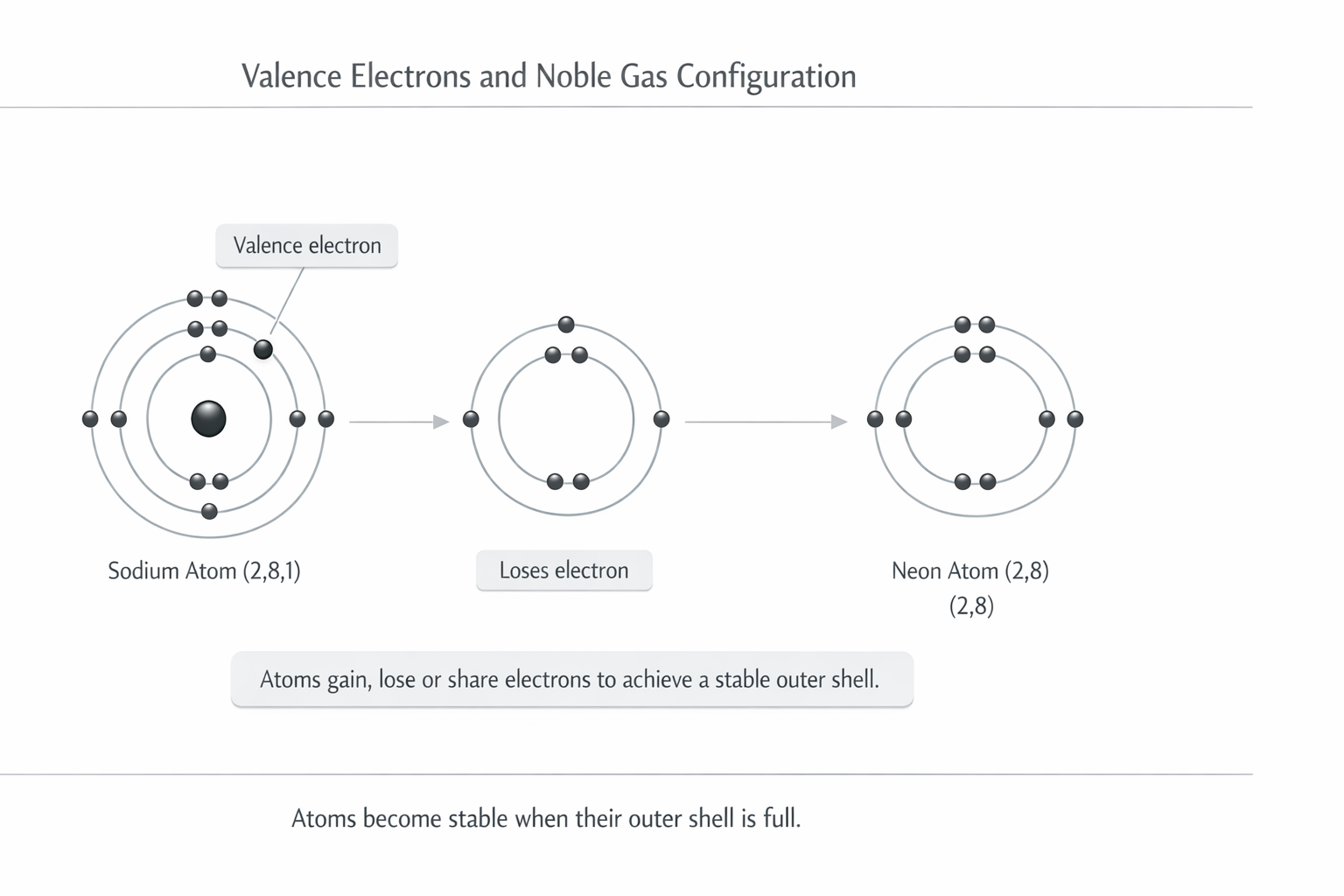
Valence electrons are electrons in the outermost shell.
These electrons determine:
• chemical bonding
• chemical reactivity
Atoms tend to gain, lose or share electrons to achieve a stable noble gas configuration.
Noble gases have full outer shells.
Helium → 2
Neon → 2,8
Argon → 2,8,8
Example:
Sodium (2,8,1) loses one electron to form 2,8, which is stable.
Isotopes are atoms of the same element with the same number of protons but different numbers of neutrons.
Therefore they have:
• same atomic number
• different mass numbers
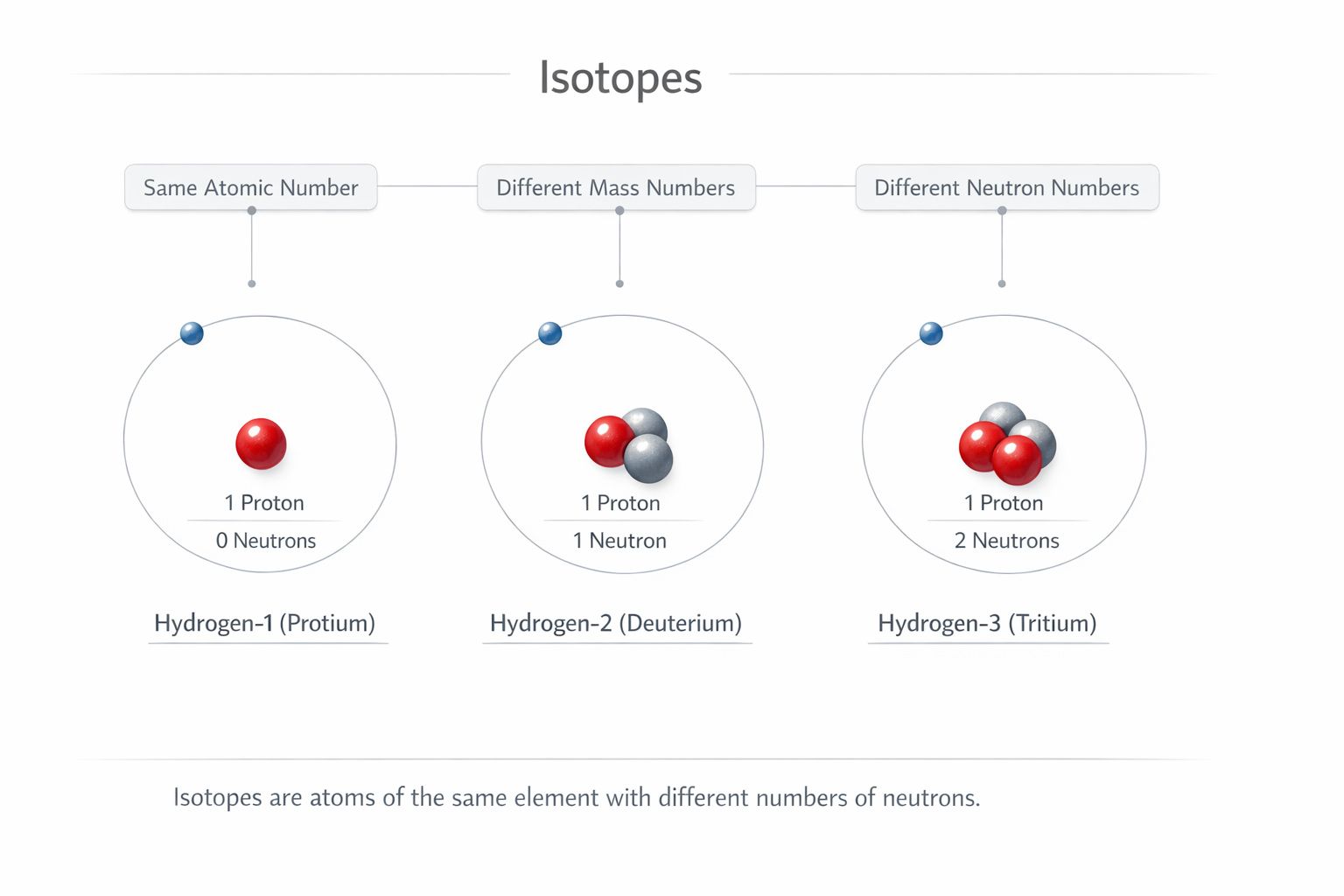
Hydrogen-1 (Protium)
1 proton
0 neutrons
Hydrogen-2 (Deuterium)
1 proton
1 neutron
Hydrogen-3 (Tritium)
1 proton
2 neutrons
Carbon-12
Carbon-13
Carbon-14
All contain 6 protons but different neutron numbers.
Carbon-14 is used in radiocarbon dating.
Chlorine-35
Chlorine-37
Both have 17 protons but different numbers of neutrons.


 Google