
Course:
Chemistry – 0570

The periodic table arranges elements in order of increasing atomic number and groups elements with similar chemical properties together. Elements are organised into periods and groups, which help explain patterns in their physical and chemical behaviour.
Across a period, elements gradually change from metallic to non-metallic properties, while atomic radius generally decreases and electronegativity increases. Elements in the same group have the same number of valence electrons, which explains why they have similar chemical properties.
Important groups include Group I alkali metals, which are soft and highly reactive metals; Group VII halogens, which are reactive non-metals; transition elements, which are dense metals that often form coloured compounds and act as catalysts; and noble gases, which are very unreactive because they have complete outer electron shells.
Understanding periodic trends allows scientists to predict the properties and reactions of elements, even those that have not been studied in detail.
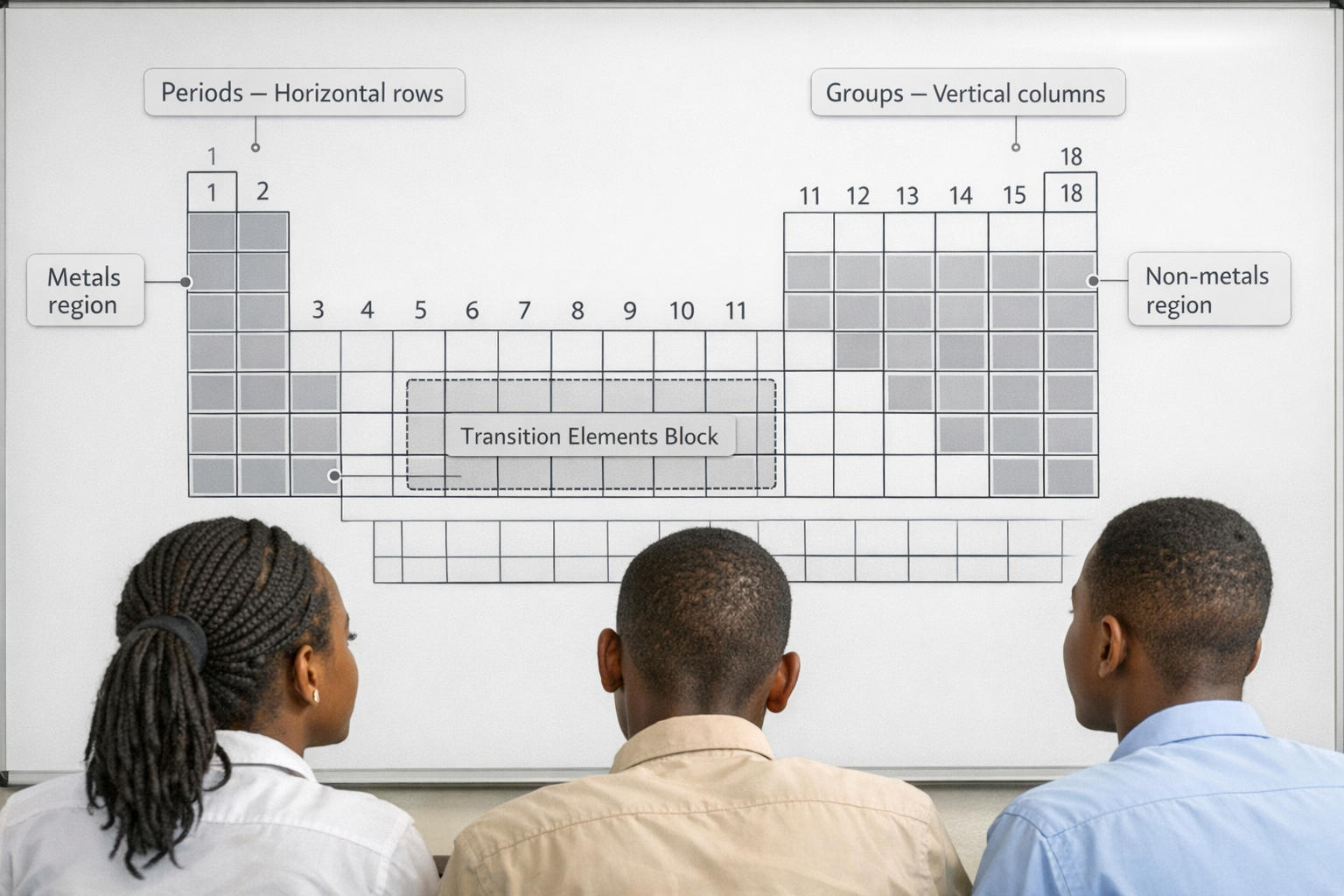
The periodic table is a chart that organises all known chemical elements according to their atomic number.
Elements are arranged in:
• Periods – horizontal rows
• Groups – vertical columns
Elements in the same group have similar chemical properties because they have the same number of outer electrons.
The periodic table provides important information about elements, including:
• atomic number
• element symbol
• atomic mass
• group number
• period number
Na = Sodium
Atomic number = 11
This means sodium has 11 protons and 11 electrons.
Each element has a unique chemical symbol.
Chemists use symbols to represent elements in chemical equations and formulas.
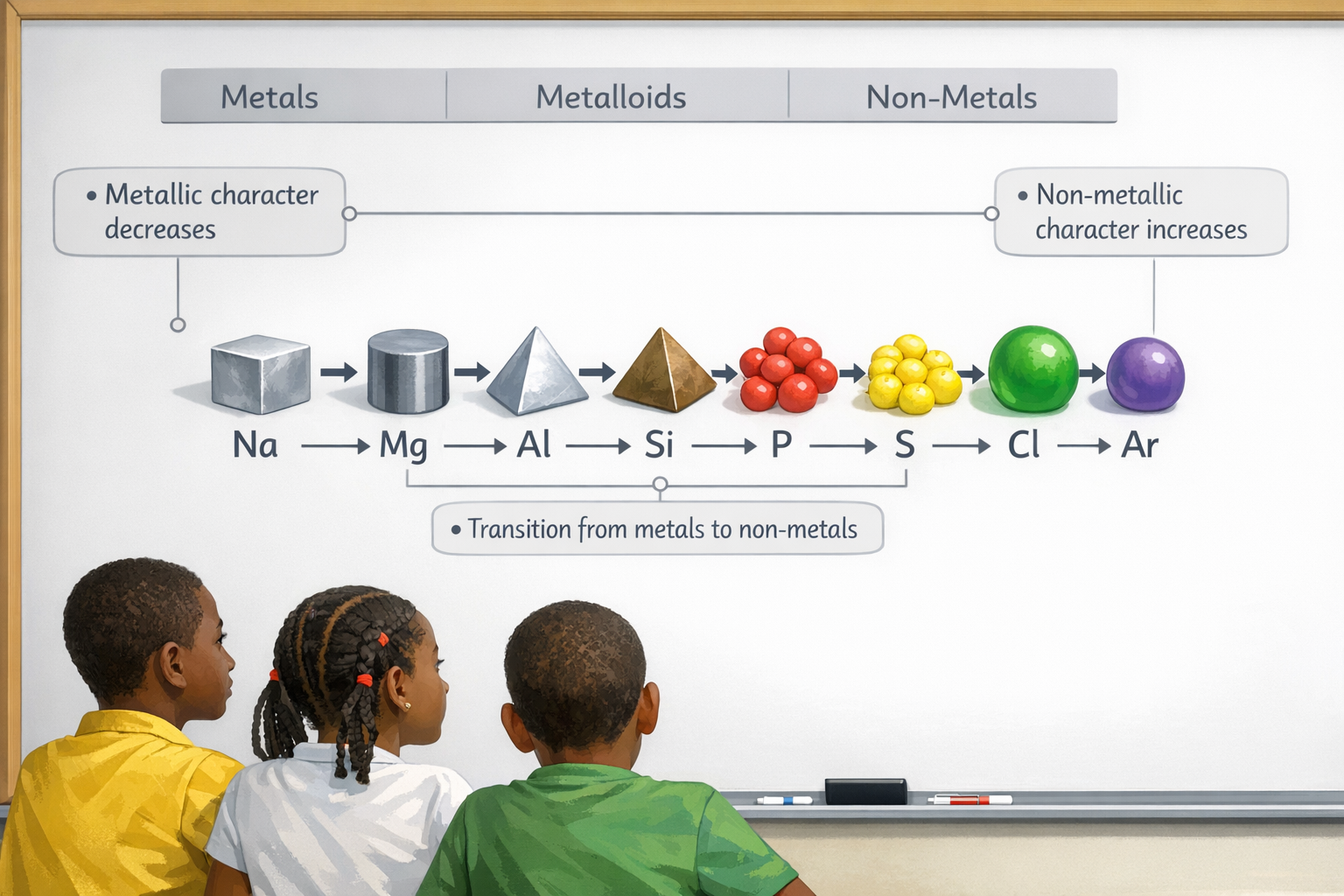
Across a period (from left to right), several trends occur.
Elements change from:
Metals → Metalloids → Non-metals
Na → Mg → Al → Si → P → S → Cl → Ar
Metals are found on the left side of the table, while non-metals are found on the right side.
Electronegativity is the ability of an atom to attract electrons in a chemical bond.
Across a period:
• electronegativity increases
This means elements on the right side attract electrons more strongly.
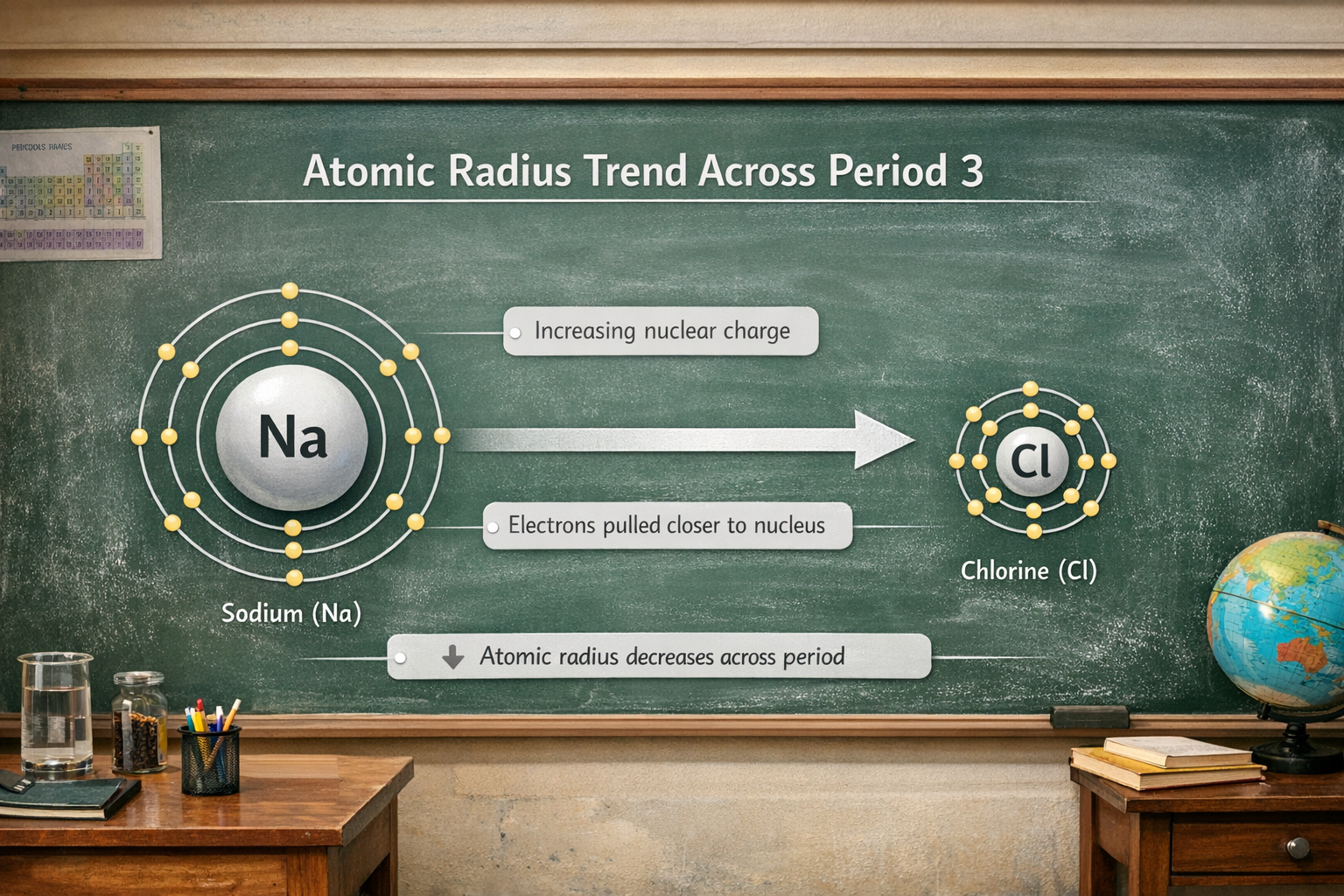
Atomic radius is the size of an atom.
Across a period:
• atomic radius decreases
This occurs because the nuclear charge increases, pulling electrons closer to the nucleus.
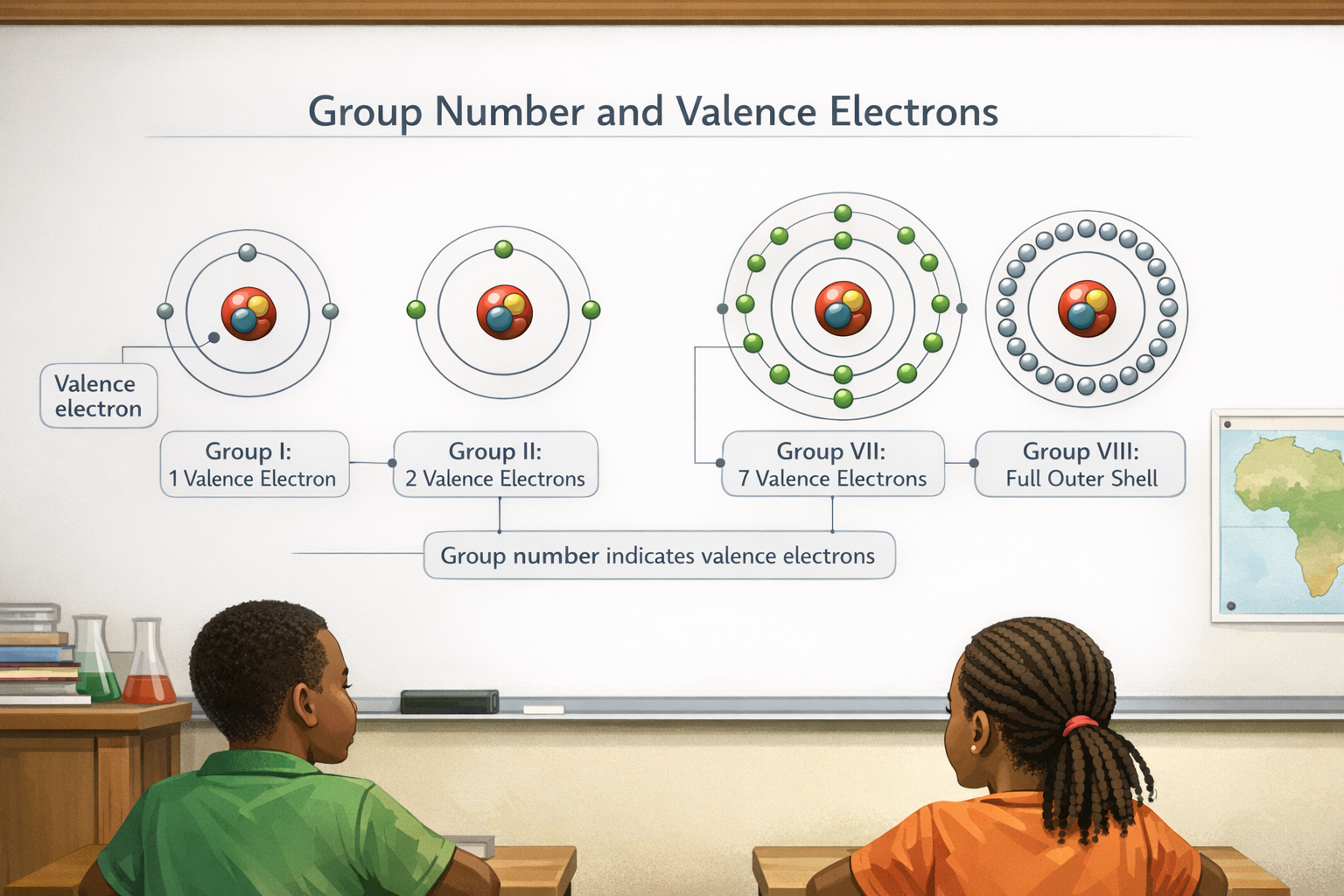
The group number indicates the number of valence electrons in an atom.
Valence electrons determine chemical reactivity and bonding behaviour.
The period number indicates the number of electron shells in an atom.
Sodium is in Period 3, so it has three electron shells.
• Lithium
• Sodium
• Potassium
• relatively soft metals
• low densities
• low melting points
• highly reactive
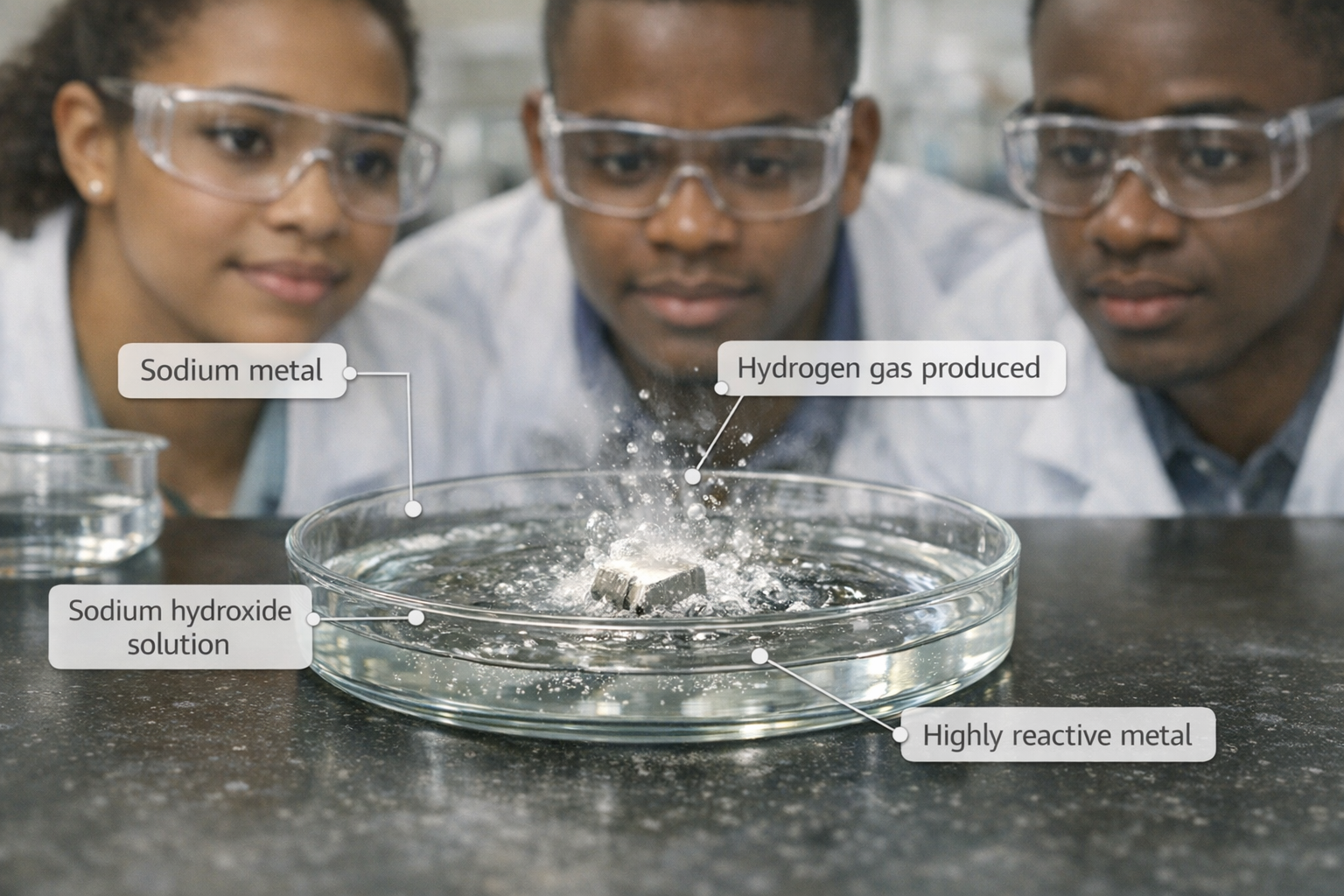
Group I metals react with water to produce:
• hydrogen gas
• metal hydroxides
Sodium + Water → Sodium hydroxide + Hydrogen
Reactivity increases down the group.
• Fluorine
• Chlorine
• Bromine
• Iodine
These are diatomic non-metals, meaning they exist as molecules containing two atoms.
Cl₂
Br₂
I₂
Reactivity decreases down the group.
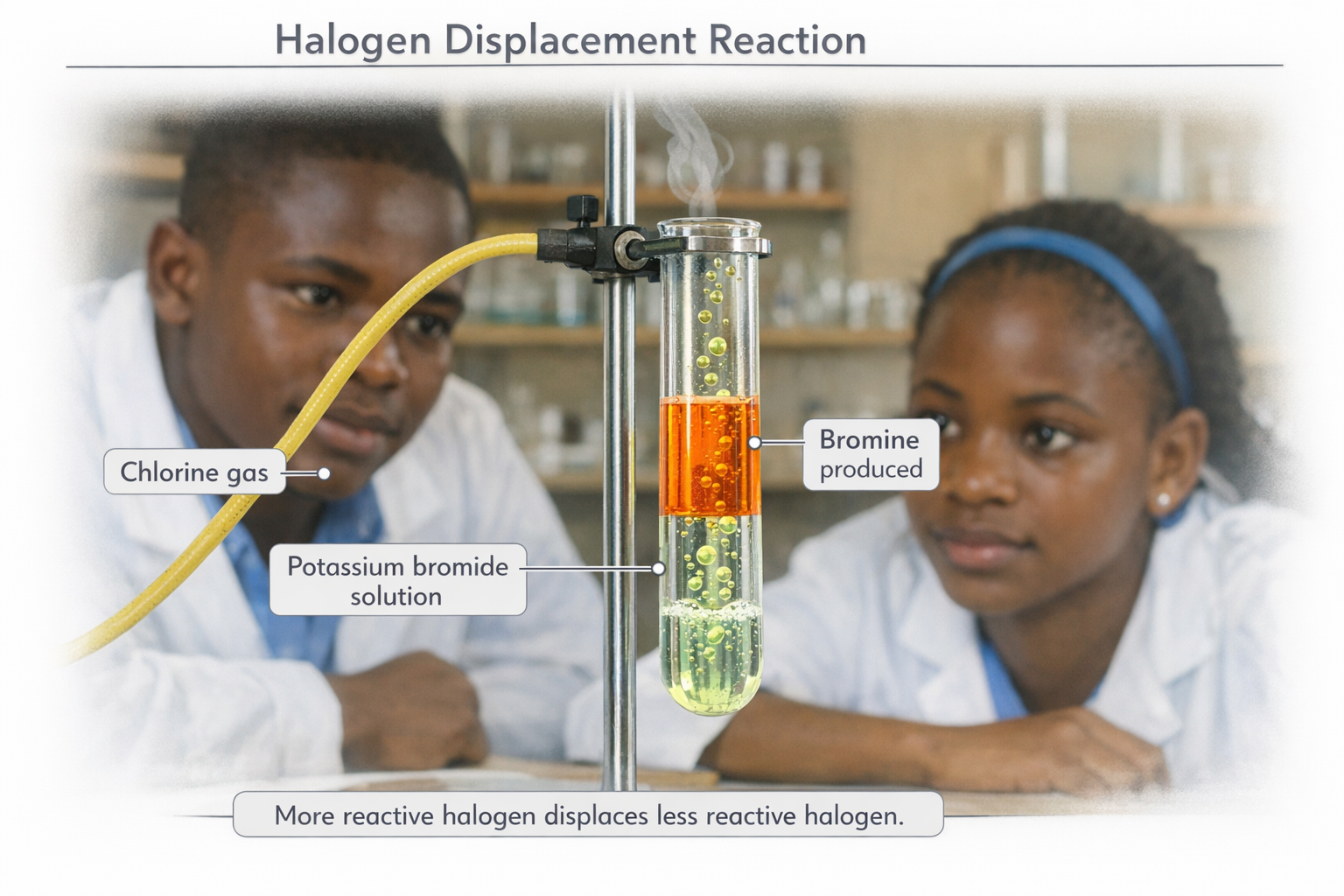
A more reactive halogen can displace a less reactive halogen from a compound.
Chlorine displaces bromine from potassium bromide.
Transition elements are located in the middle of the periodic table.
• high melting points
• high densities
• variable valencies
• formation of coloured compounds
• good catalysts
Iron
Copper
Nickel
These metals are widely used in industry and chemical reactions.
• Helium
• Neon
• Argon
• Krypton
• Xenon
These gases are very unreactive because their outer electron shells are complete.
Examples include:
• Argon – used in electric lamps and welding to provide an inert atmosphere
• Helium – used to fill balloons and airships
• Neon – used in advertising lights
Their lack of reactivity makes them useful in situations where chemical reactions must be prevented.
Because elements in the same group share similar properties, the periodic table allows scientists to:
• predict chemical behaviour
• predict reactivity
• estimate physical properties
This makes the periodic table a powerful tool in chemistry.


 Google