
Course:
Physics – 0571

Mass is a measure of the amount of matter contained in an object. It does not change with location and is measured in kilograms. Objects with larger mass have greater inertia, meaning they resist changes in motion more strongly.
Weight is the force acting on an object due to gravity. Unlike mass, weight depends on the strength of the gravitational field. The relationship between weight and mass is given by the equation:
Weight = mass × gravitational field strength
Objects also have a centre of mass, which is the point where the entire mass of the object appears to be concentrated. When the centre of mass lies directly above the base of support, the object remains stable. If it moves outside the base, the object may topple.
Experiments can be performed to determine the centre of mass of regular and irregular shapes using suspension methods. The stability of objects depends mainly on the position of the centre of mass and the width of the base of support.
Understanding these concepts helps explain balance, motion and structural stability in real-world applications.
Mass is the amount of matter contained in an object.
• It does not change with location
• It measures how much substance an object contains
• It determines how strongly an object resists changes in motion
SI Unit: kilogram (kg)
Example:
A 5 kg bag of maize meal has the same mass whether it is in Gaborone or on a mountain.
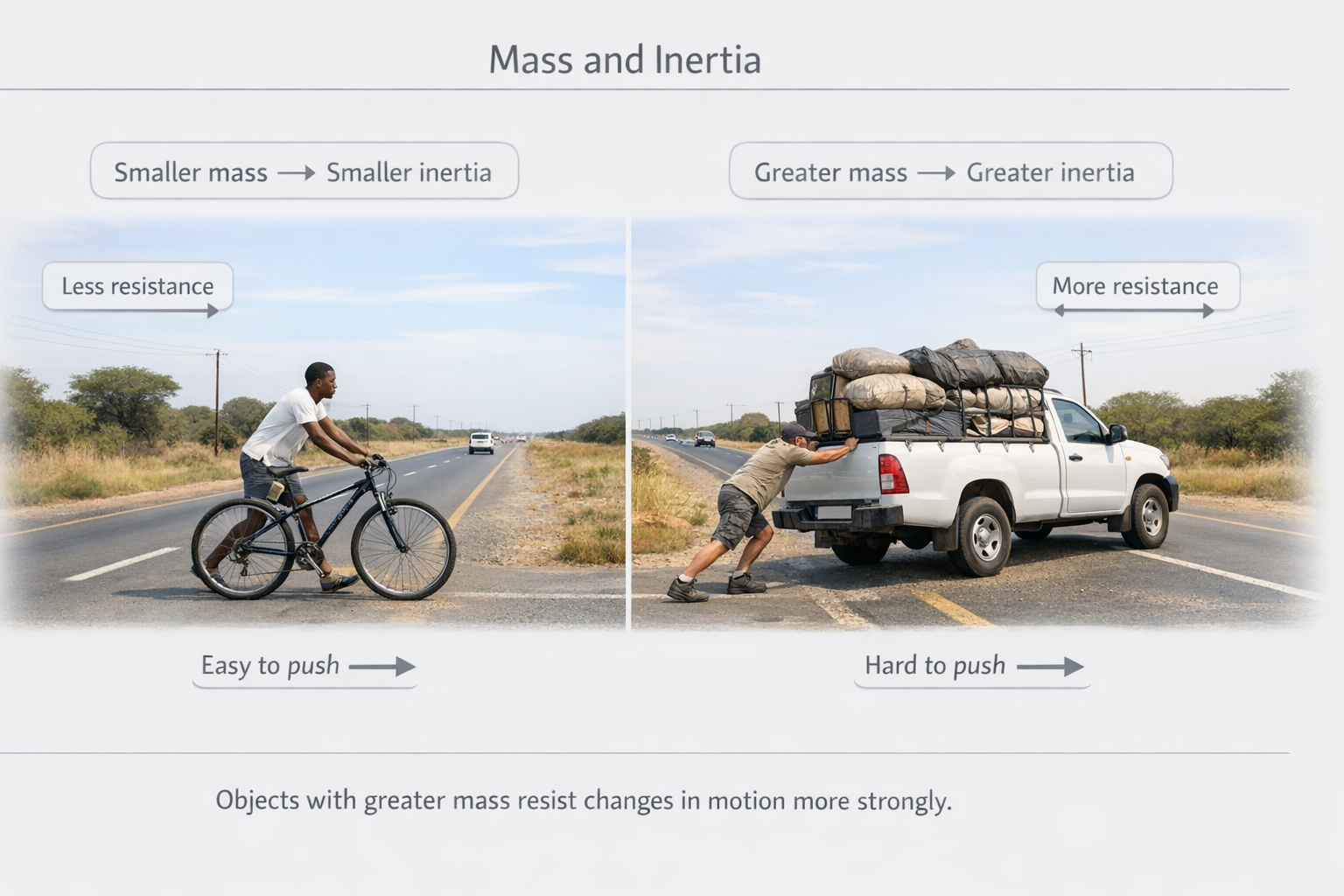
Inertia is the tendency of an object to resist changes in its state of motion.
Objects with larger mass have greater inertia.
Example:
A fully loaded pickup truck is harder to start moving or stop than an empty bicycle because it has greater mass.
Relationship:
Greater mass → greater inertia
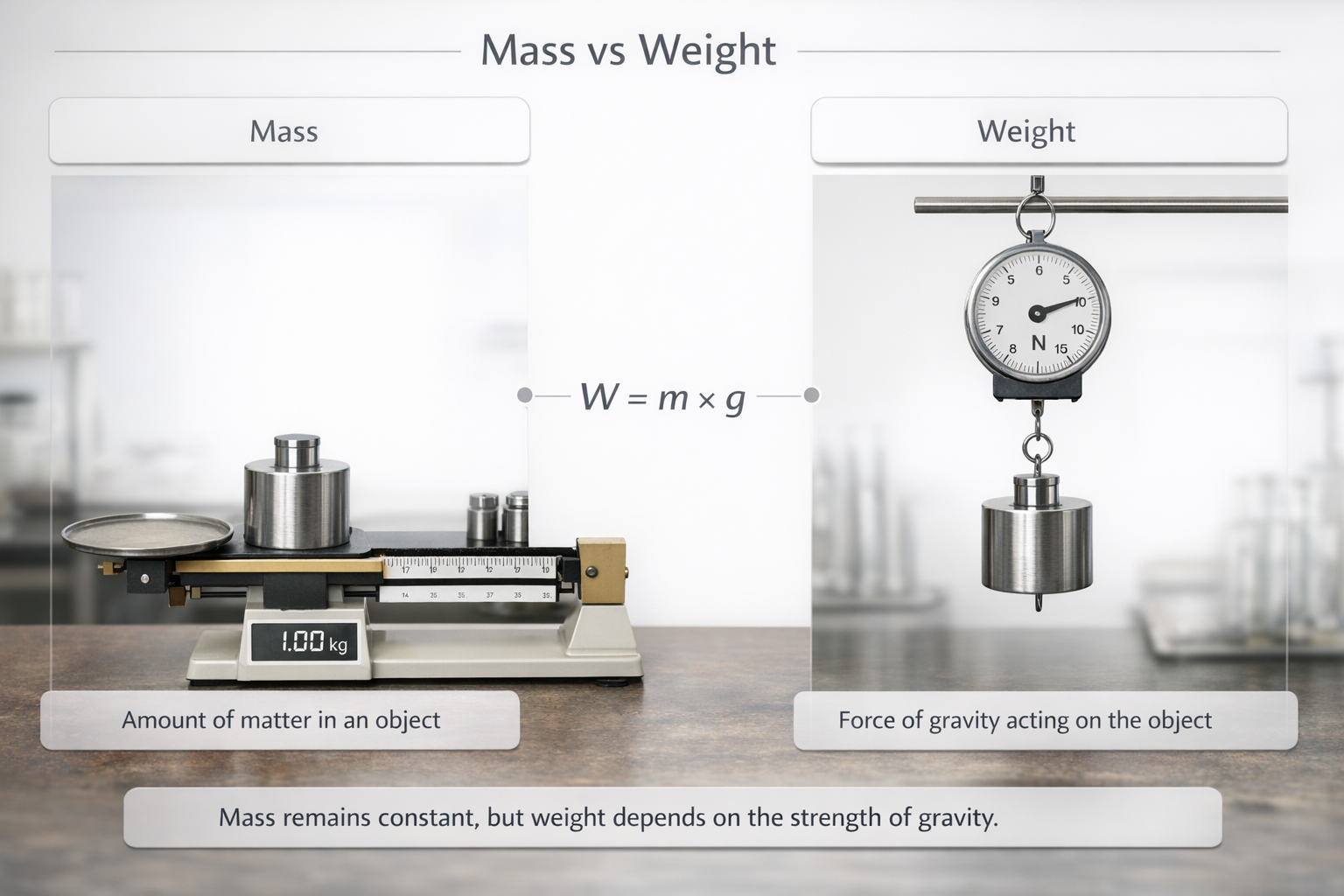
Weight is the force acting on an object due to gravity.
Formula:
Weight = mass × gravitational field strength
W = m × g
Where:
W = weight (newtons, N)
m = mass (kg)
g = gravitational field strength
Near the Earth’s surface:
g ≈ 9.8 N/kg
Example:
If a rock has a mass of 2 kg
W = 2 × 9.8
W = 19.6 N
• beam balance
• digital balance
Weight is measured using:
• spring balance
• Newton meter
Example experiment:
Place an object on a beam balance to measure mass.
Attach the object to a spring balance to measure weight.
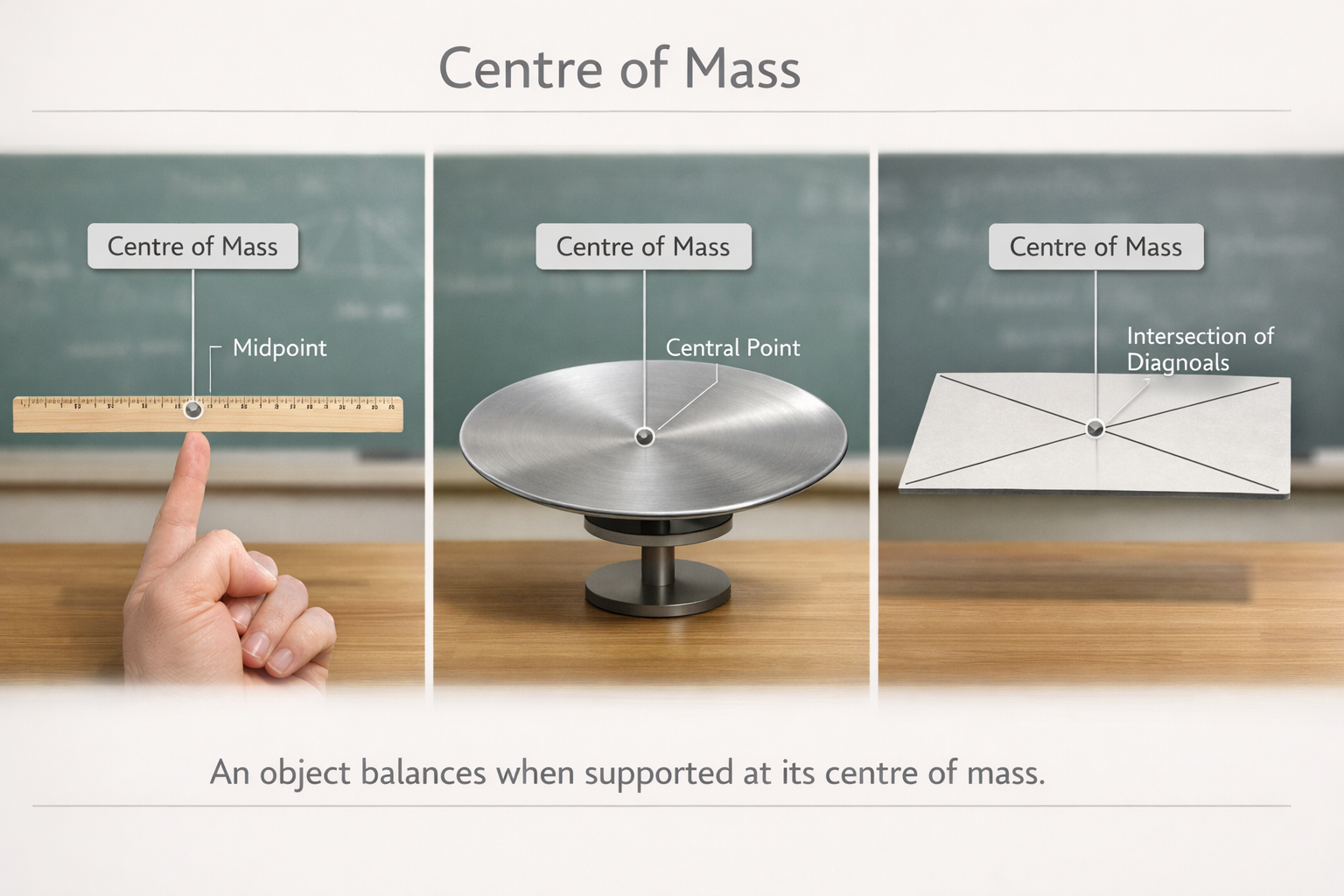
The centre of mass is the point at which the entire mass of an object appears to be concentrated.
If an object is supported at its centre of mass, it will balance.
Examples:
• the centre of a ruler
• the centre of a circular plate
A lamina is a thin flat sheet of material.
• cardboard
• metal sheet
• plastic sheet
The centre of mass of regular laminas is located at the geometrical centre.
Examples:
Rectangle → centre intersection of diagonals
Circle → centre of the circle
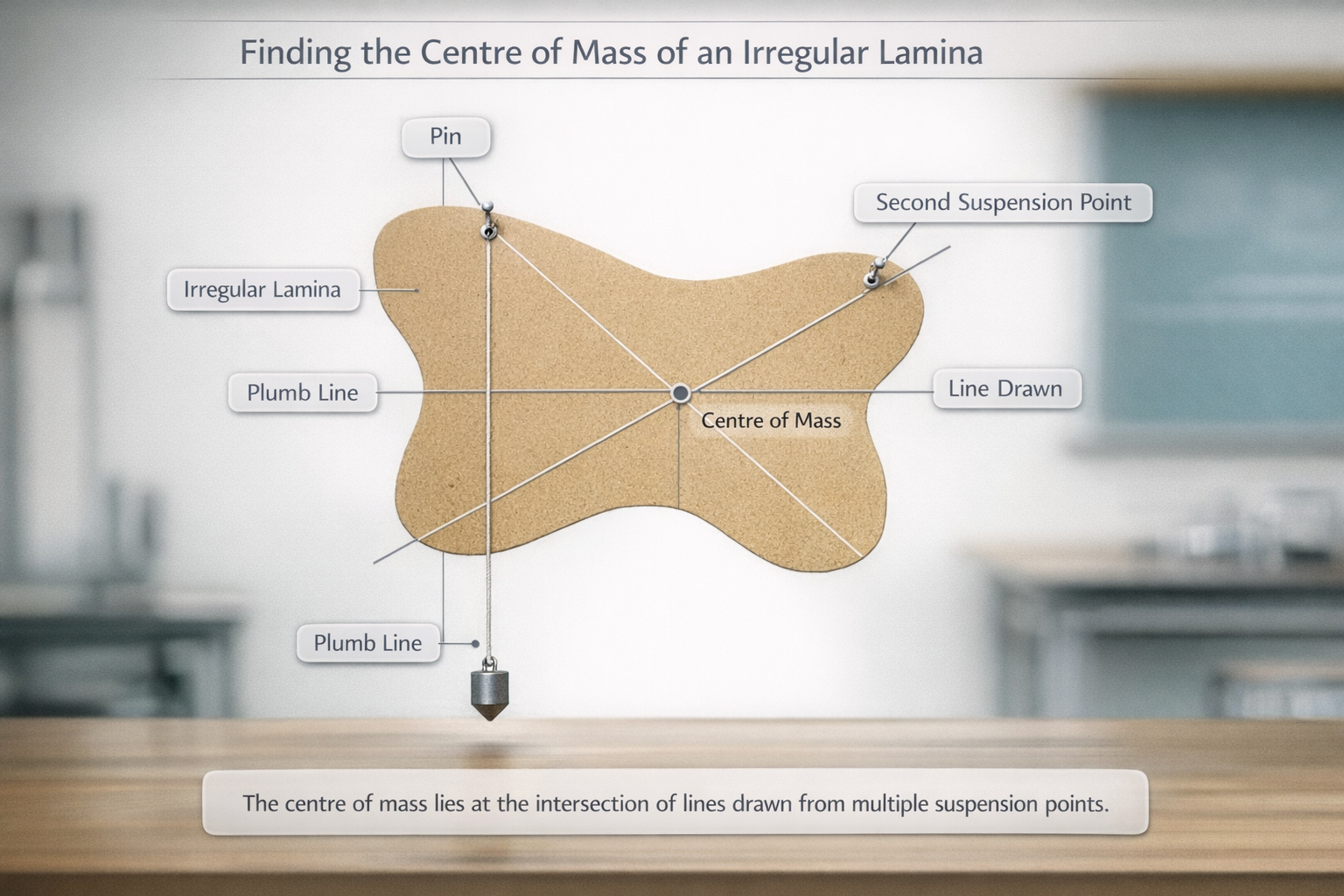
• irregular cardboard lamina
• pin or nail
• string and weight (plumb line)
• pencil
Make a small hole near the edge of the lamina.
Suspend the lamina using a pin through the hole.
Hang a plumb line from the same point.
Draw a line along the string.
Repeat using another hole.
The intersection of the lines gives the centre of mass.
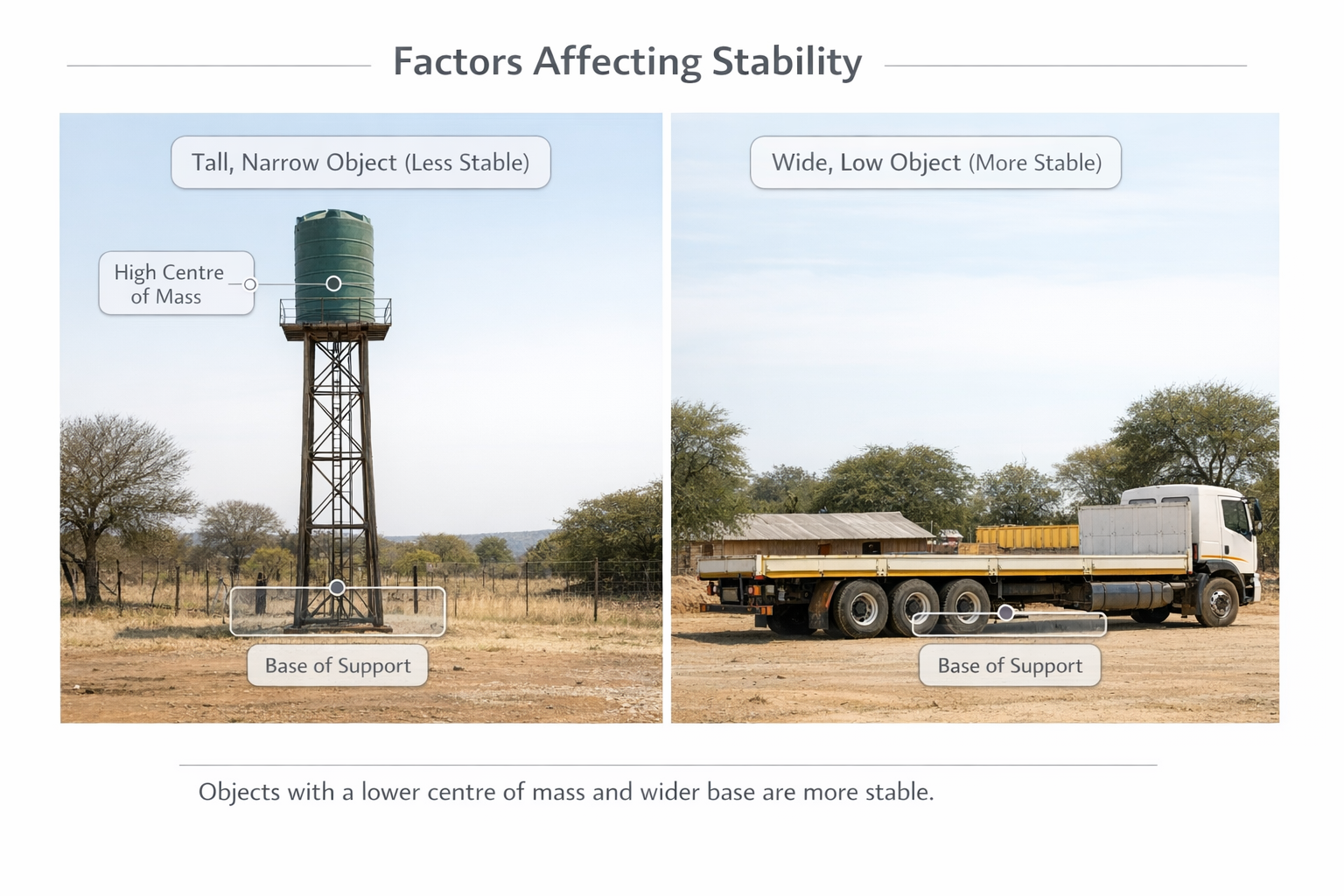
Stability refers to the ability of an object to remain upright without toppling.
Two main factors affect stability:
Lower centre of mass → greater stability
Example:
A wide-bottom clay pot is more stable than a tall narrow one.
Wider base → greater stability
Example:
Heavy trucks carrying goods between Francistown and Gaborone have wide wheel spacing to improve stability.
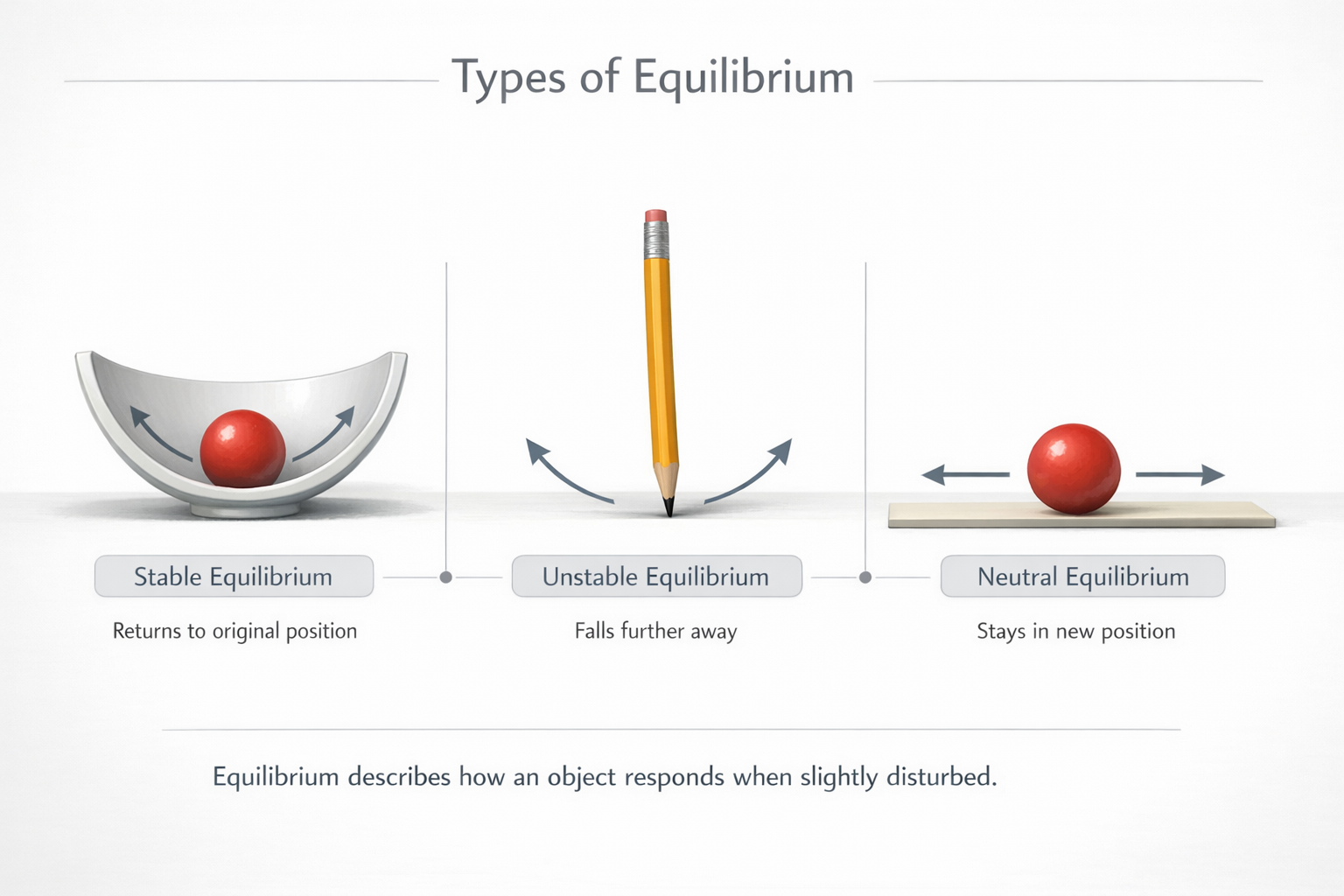
Object returns to original position when slightly disturbed.
Example:
A ball resting in a bowl.
Object moves further away when disturbed.
Example:
A pencil balanced on its tip.
Object stays in new position when moved.
Example:
A ball on a flat surface.
Real-life examples of stability and centre of mass include:
• balancing loads on donkey carts in rural villages
• stability of water tanks on stands
• athletes maintaining balance in football and athletics
• design of tall buildings in Gaborone
These examples show how mass distribution and centre of mass affect everyday structures and activities.


 Google