
Course:
Business Studies – 0615


This topic introduces the fundamental economic problem faced by individuals, businesses and governments. It explains why scarcity exists, how unlimited wants contrast with limited resources, and how this leads to choice and opportunity cost. Understanding this concept forms the foundation of Business Studies because all business decisions are influenced by scarcity and trade-offs.
Economic problem
Scarcity
Needs
Wants
Choice
Opportunity cost
Factors of production
Resource allocation
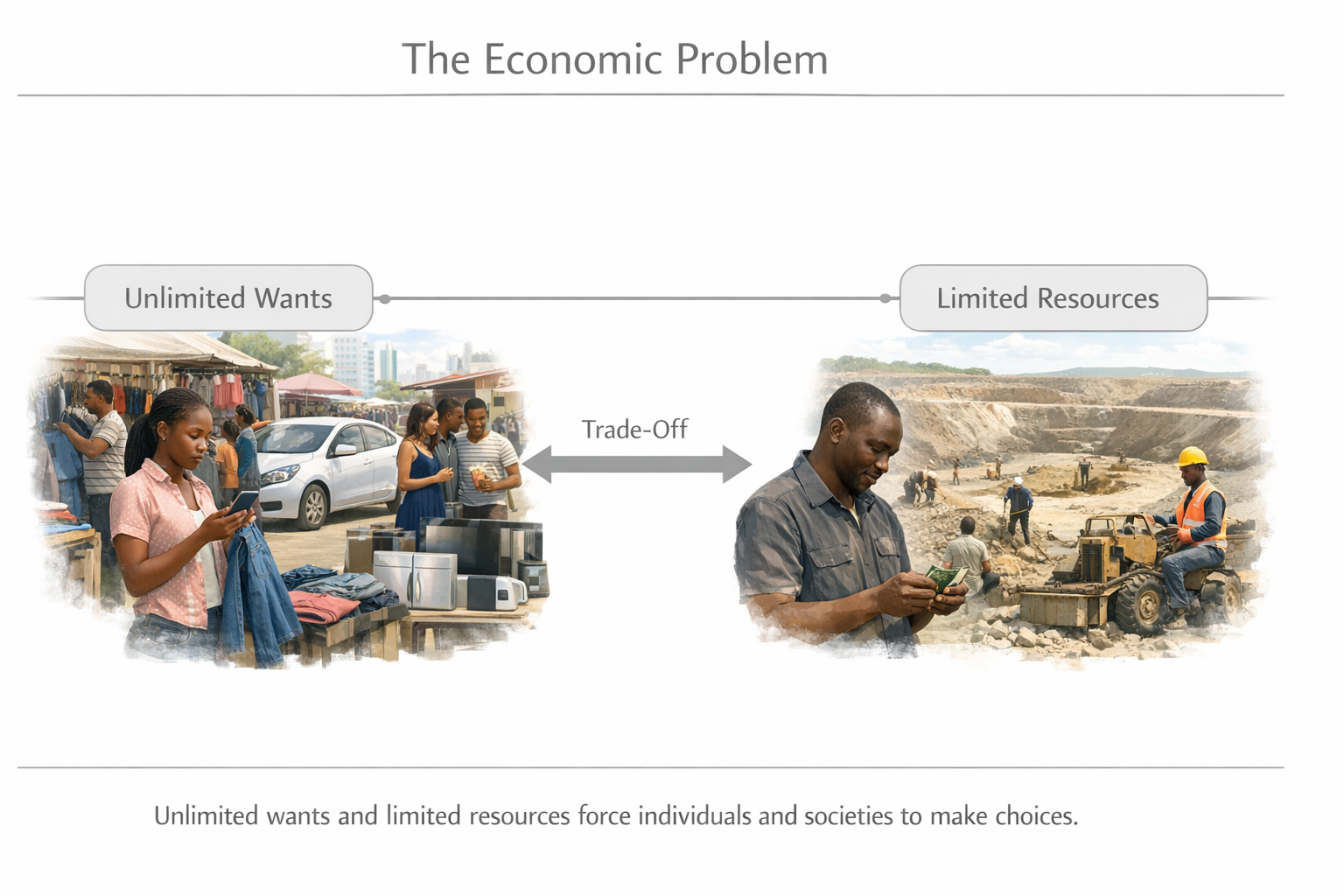
Human wants are unlimited.
Resources used to satisfy those wants are limited (scarce).
Since resources are limited, not all wants can be satisfied at the same time. Therefore, choices must be made.
Individuals (e.g. how to spend income)
Businesses (e.g. what to produce)
Governments (e.g. how to allocate national budgets)
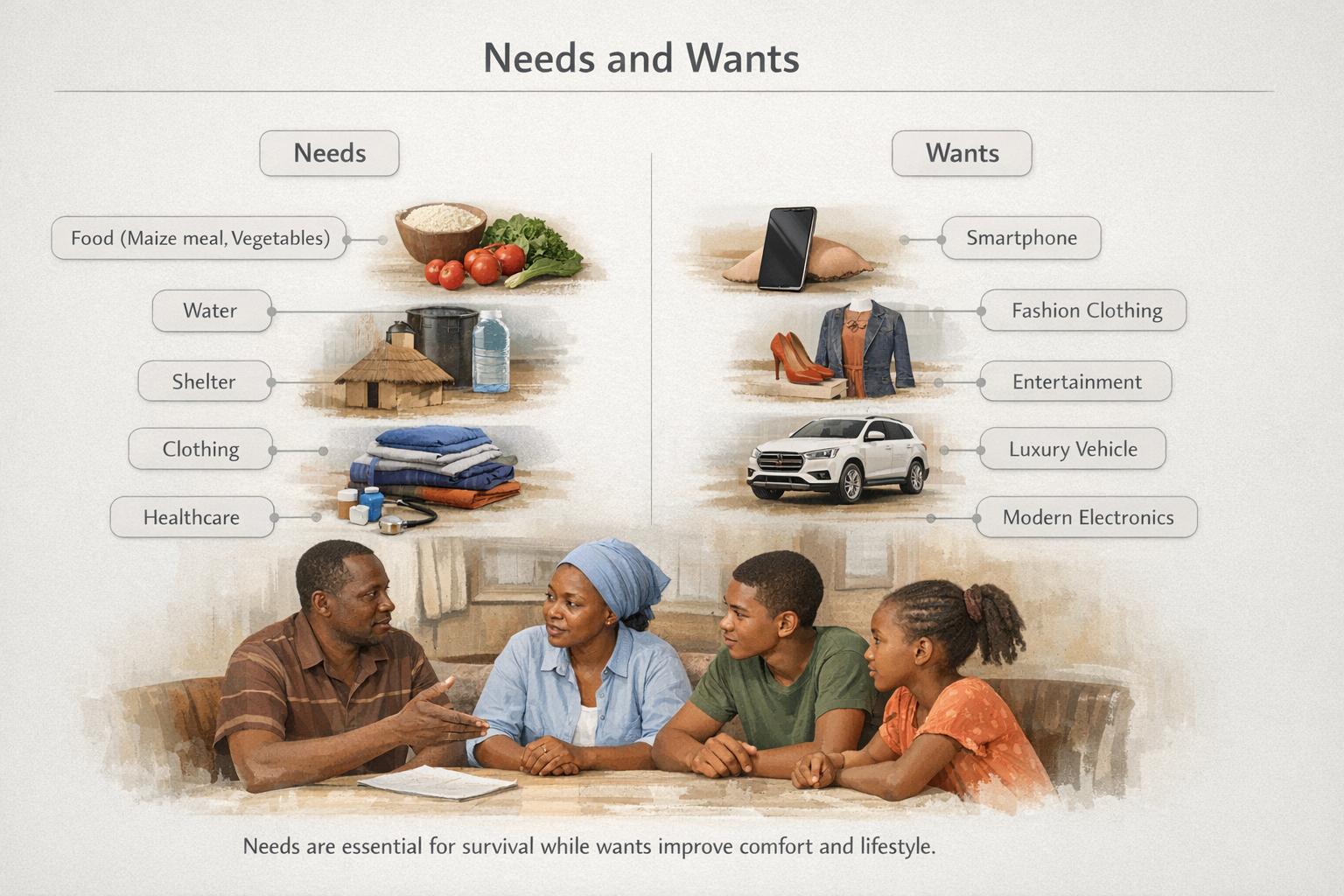
Needs are basic requirements necessary for survival.
Food
Water
Shelter
Clothing
Healthcare
If needs are not satisfied, survival is threatened.
Wants are desires for goods and services that improve comfort or lifestyle but are not essential for survival.
Smartphones
Luxury cars
Designer clothing
Entertainment services
Wants are unlimited because once one want is satisfied, new wants emerge.
Needs are limited and essential.
Advertising
Income level
Fashion trends
Technology
Social pressure
Businesses mainly focus on satisfying wants in competitive markets.
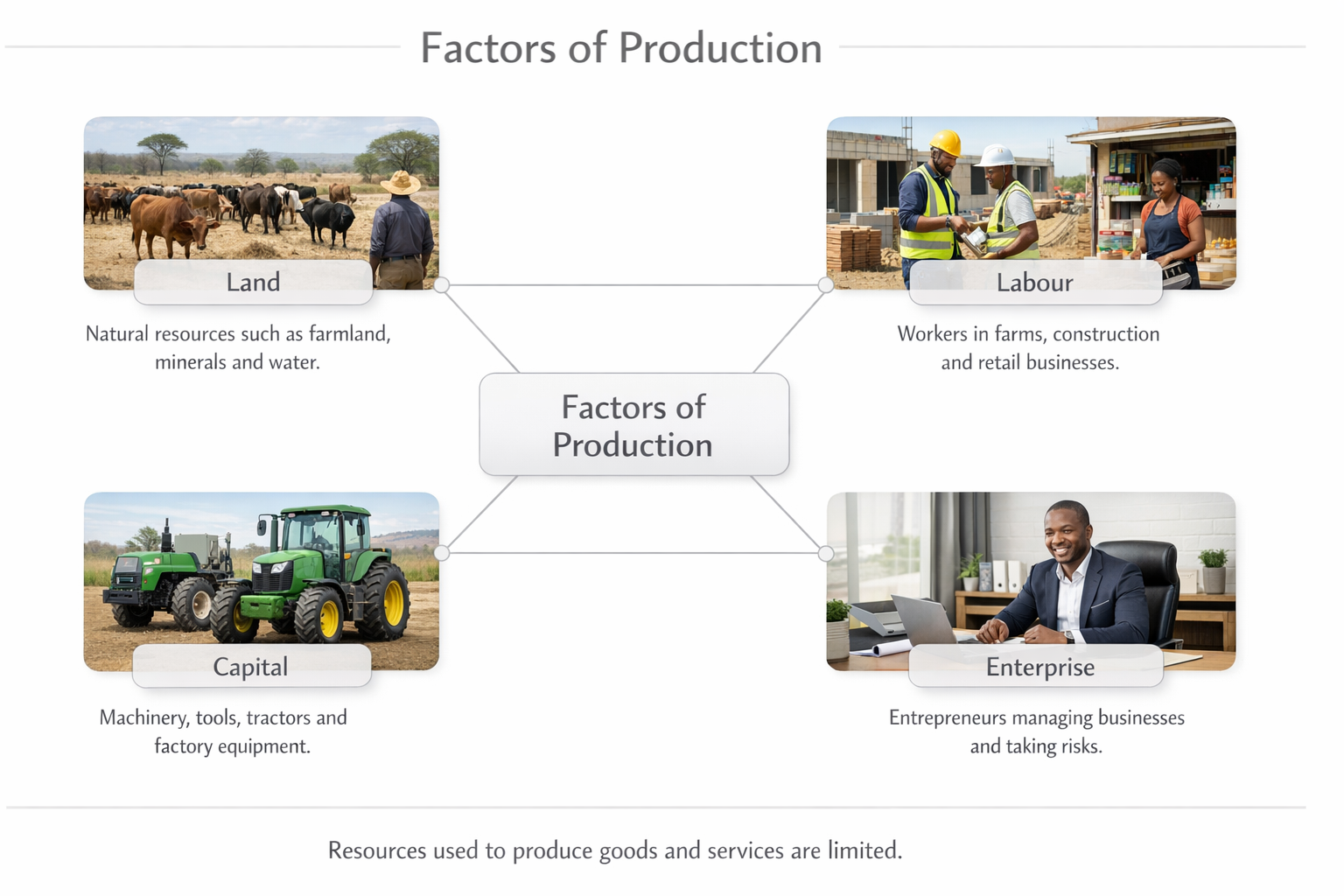
Scarcity means that resources are limited in supply relative to the unlimited wants they must satisfy.
Land (natural resources)
Labour (human effort)
Capital (machinery and equipment)
Enterprise (entrepreneurial skills)
Even wealthy countries experience scarcity because wants always exceed available resources.
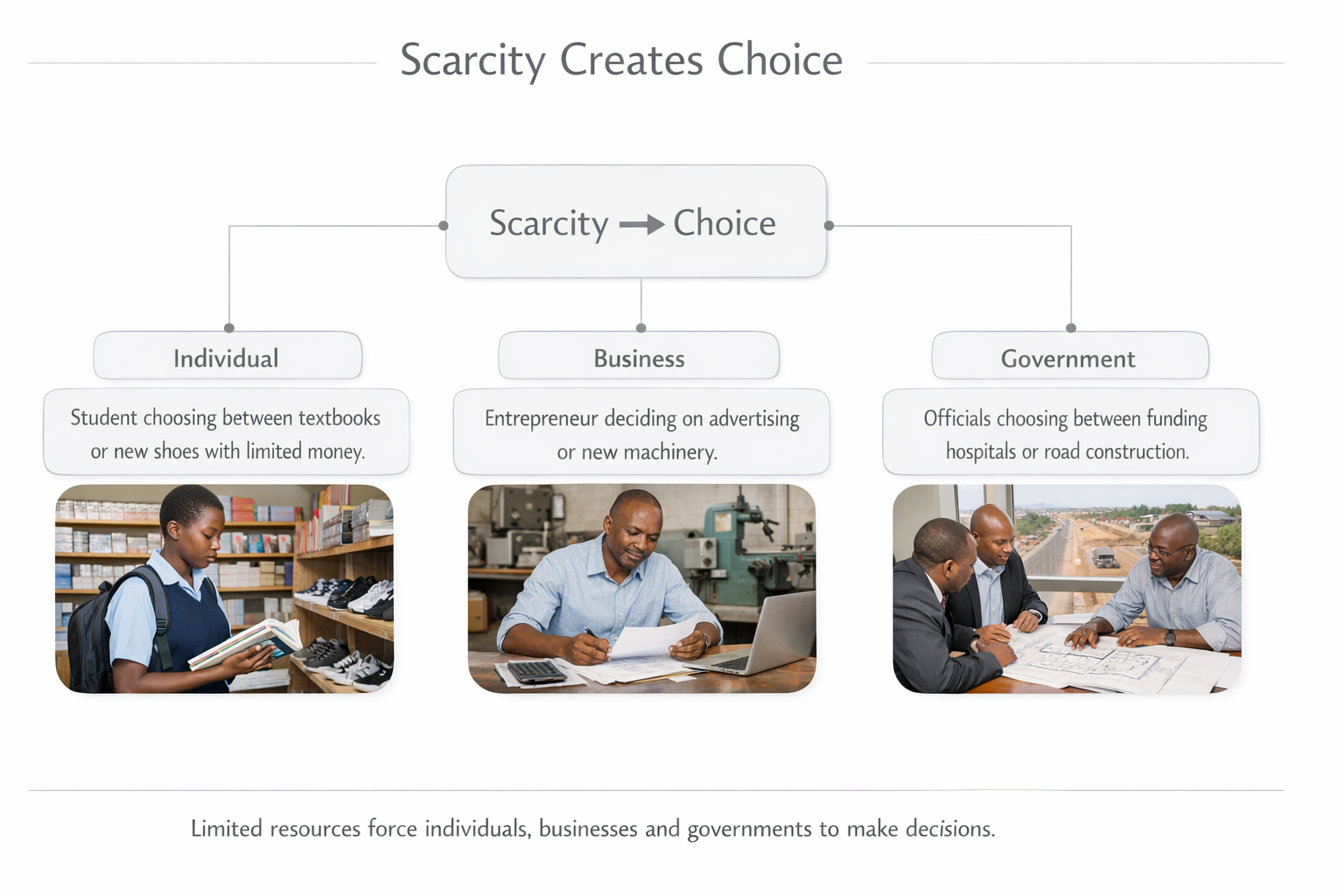
Because of scarcity, individuals, businesses and governments must make choices.
A student with P200 must choose between buying textbooks or new shoes.
A company must choose whether to invest in advertising or new machinery.
The government must choose between funding healthcare or infrastructure.
Every choice involves a trade-off.
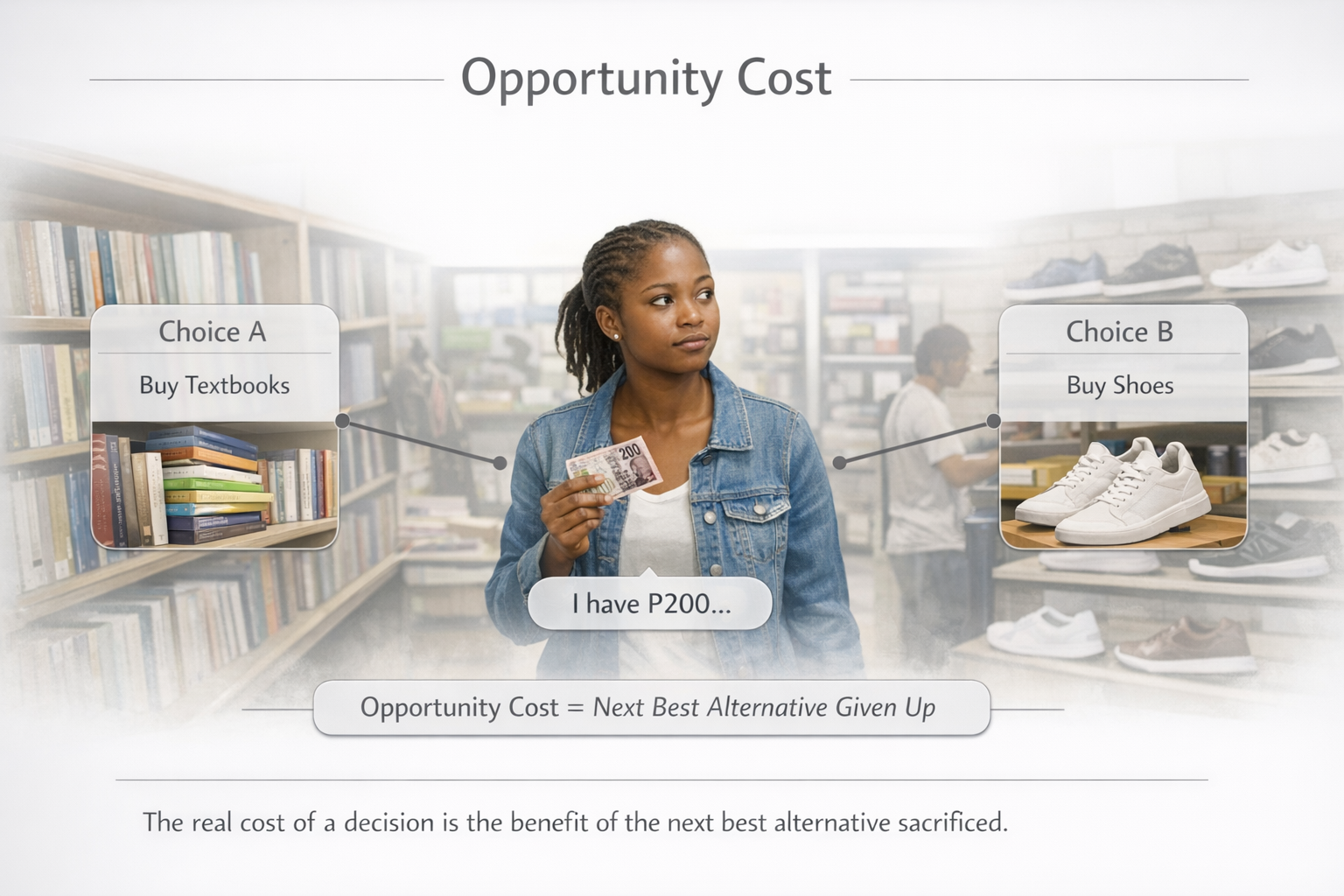
Opportunity cost is the value of the next best alternative that is given up when a choice is made.
It is not the total cost — it is the benefit sacrificed.
If a student spends P100 on a concert ticket instead of buying a book, the opportunity cost is the benefit of the book.
If a company uses its factory to produce desks instead of chairs, the opportunity cost is the profit from chairs.
If government spends money on building roads instead of hospitals, the opportunity cost is the benefit of improved healthcare services.
The real cost of any decision is what you give up.
Opportunity cost exists because of scarcity and choice.
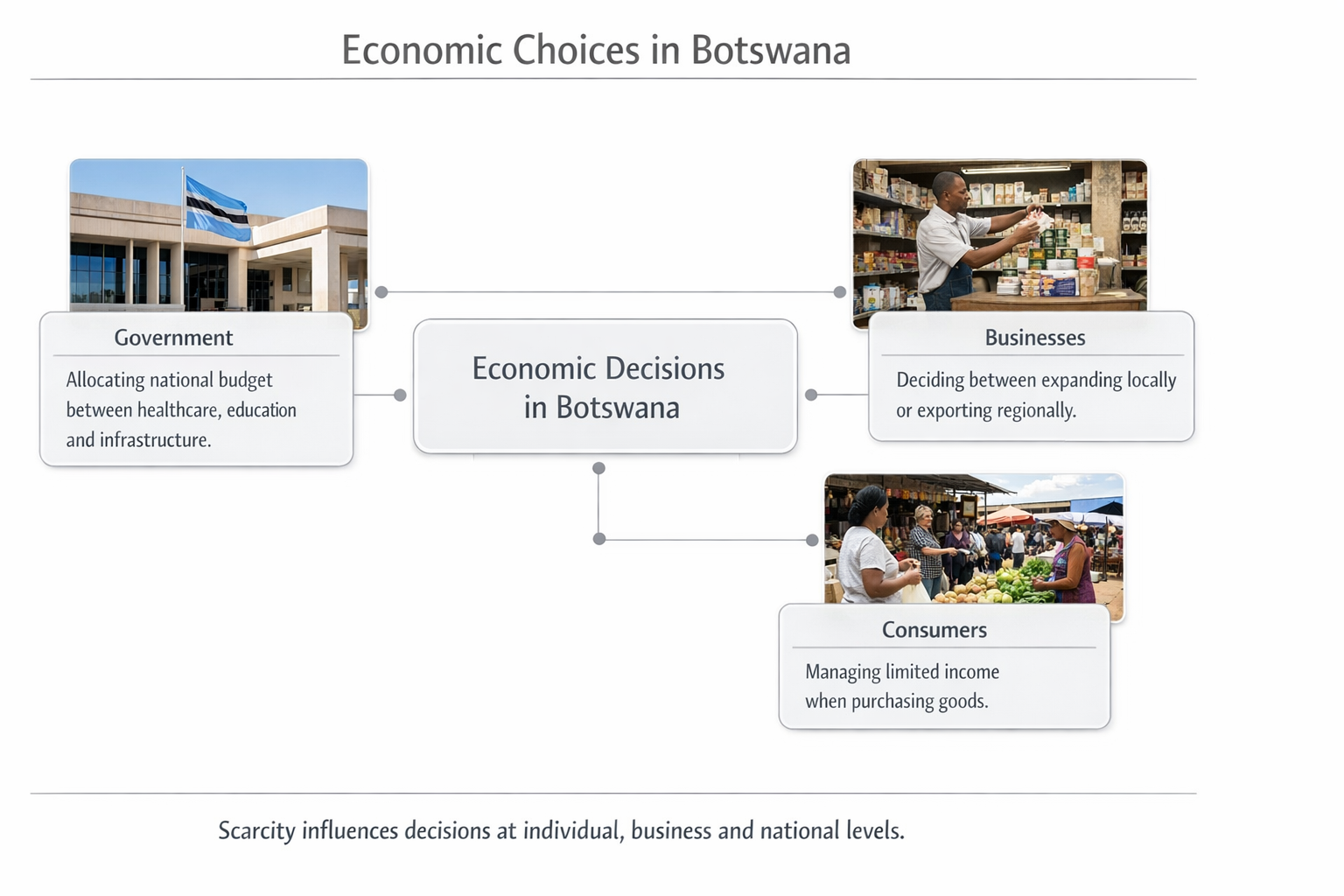
Government must choose between funding education, healthcare or economic diversification.
Businesses must choose between expanding locally or exporting regionally.
Consumers must prioritise spending due to limited income.
Scarcity influences all economic planning and development strategies.
Human wants are dynamic and constantly expanding.
Resources remain finite.
Population growth increases pressure on resources.
However, improved technology, better resource management and economic growth can reduce the impact of scarcity.
Efficient allocation of resources is essential for economic development.
Start with a clear definition.
Use business or Botswana-based examples.
Explain cause and effect (Scarcity → Choice → Opportunity Cost).
If asked to discuss, include examples of individuals, businesses and government.
If asked to describe opportunity cost, always mention “next best alternative”.
Confusing needs with wants
Defining scarcity as “poverty” (it is about limited resources, not lack of money)
Forgetting to mention “next best alternative” when defining opportunity cost
Giving examples without explanation
Ignoring the link between scarcity and choice