
Course:
Religious Education – 0588

This lesson examines the meaning of religion and explores its role in society. It analyses the theological definition of religion and evaluates both the positive and negative impact of religion in social development.
Religion
Theological definition
Sacred
Divine authority
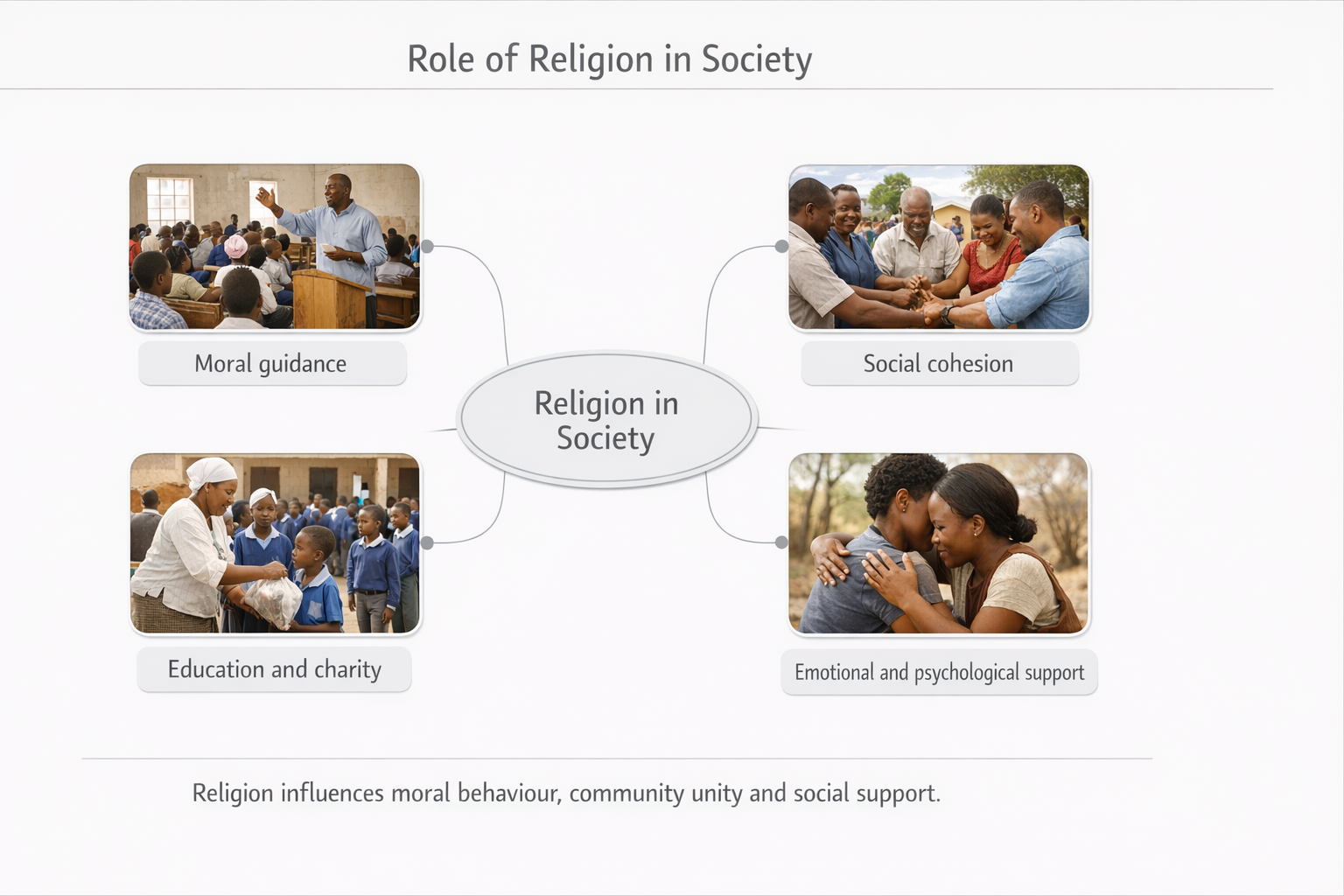
Moral guidance
Social cohesion
Religious tolerance
Extremism
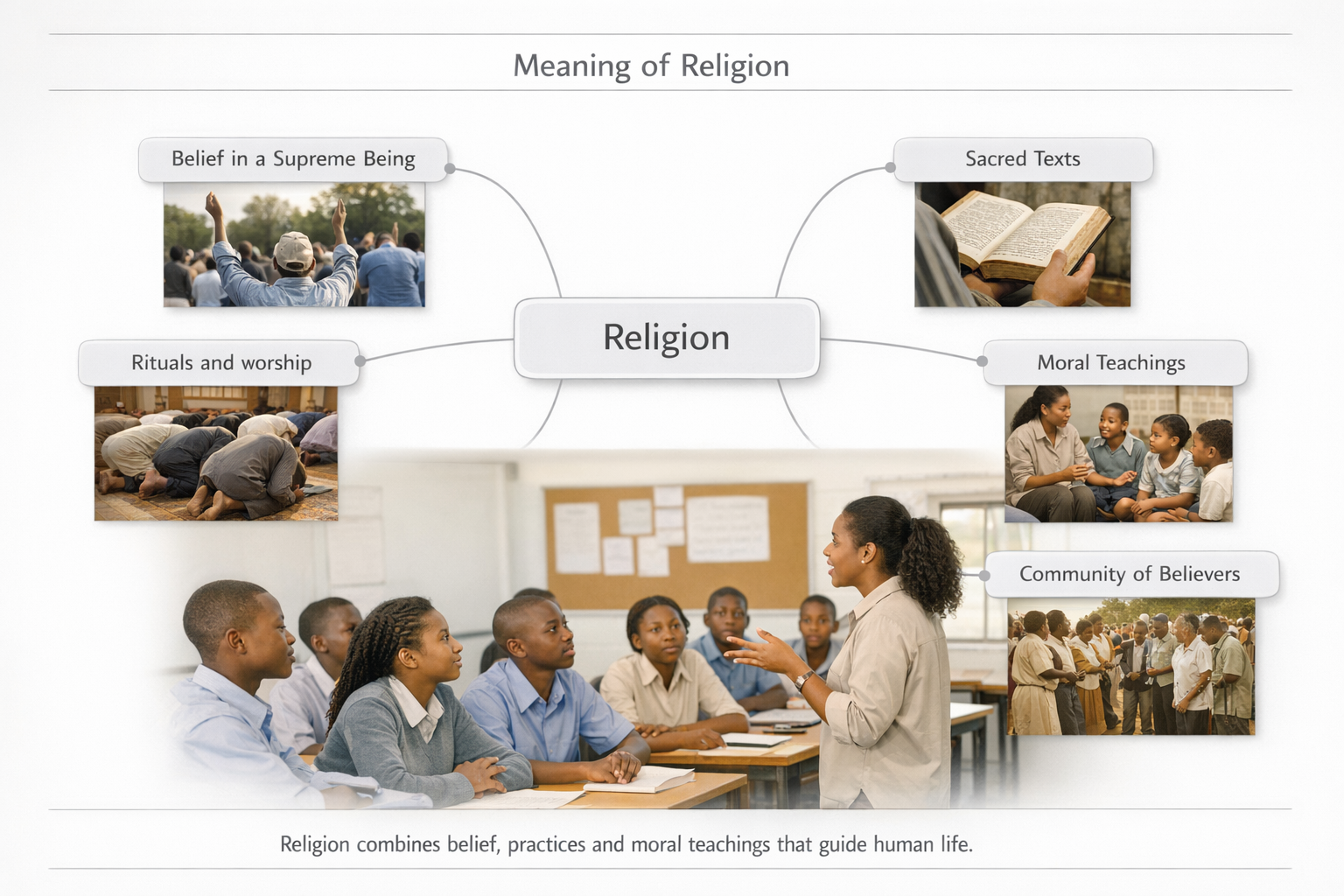
Religion refers to a system of beliefs, practices, rituals and moral values centred on the sacred or divine.
Belief in a Supreme Being or spiritual reality
Rituals and worship practices
Sacred texts
Moral teachings
A community of believers
Religion influences how individuals understand life, death, purpose and morality.
Religion is not merely belief; it also shapes behaviour and identity.
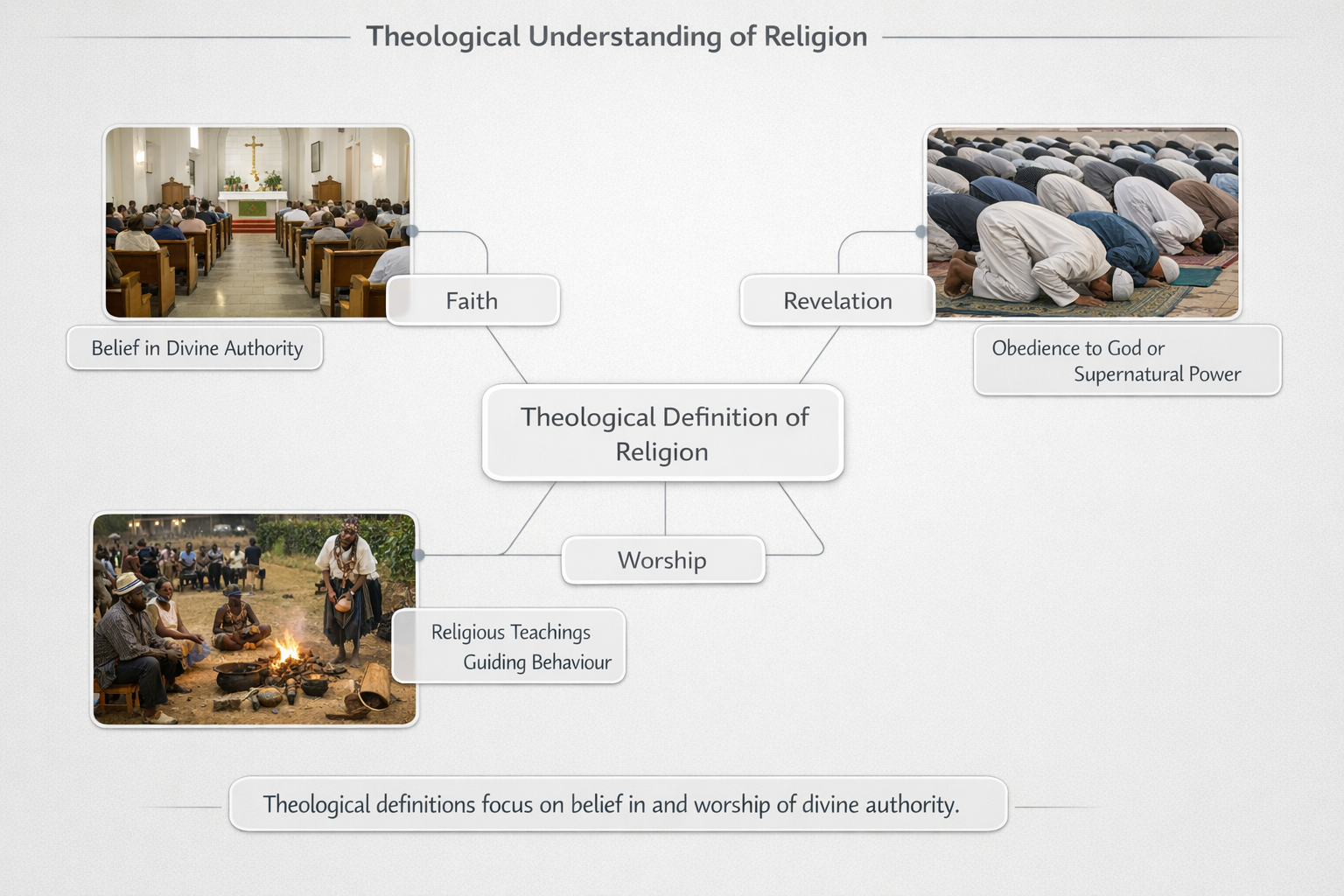
A theological definition focuses on belief in and worship of God or gods.
It explains religion as:
Belief in and obedience to a divine or supernatural power.
Faith
Revelation
Worship
Divine authority
Christianity defines religion through belief in God the Creator.
Islam defines religion through submission to Allah.
African Traditional Religion recognises Modimo and ancestral spirits.
Some religions, such as certain forms of Buddhism, do not focus on a creator God.
Therefore, a purely theological definition may exclude non-theistic religions.
Religion plays several roles in society.
Honesty
Justice
Respect
Forgiveness
Responsibility
These values promote social stability and law-abiding behaviour.
Worship gatherings
Ceremonies
Shared beliefs
This strengthens unity and collective identity.
Establish schools
Operate hospitals
Provide charity
Religion contributes to national development.
Hope during suffering
Comfort during grief
Meaning in times of crisis
It strengthens resilience.
Religion has both positive and negative impacts.
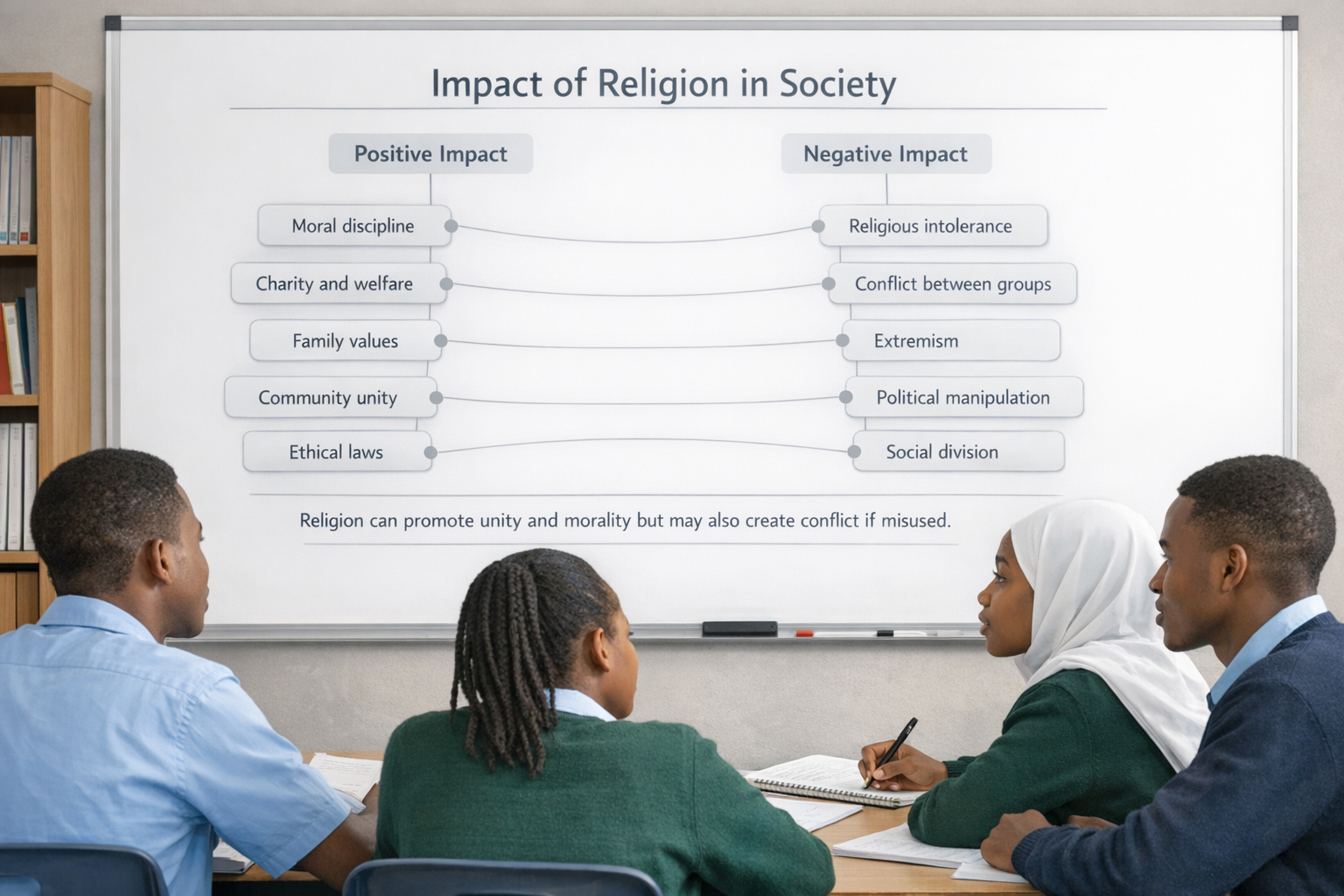
Promotes moral discipline
Encourages charity
Strengthens families
Supports community development
Influences ethical laws
Religion can contribute to social harmony and national identity.
Promote intolerance
Cause conflict
Encourage extremism
Be manipulated for political purposes
Create division among groups
Religion can therefore both unite and divide society.
Religion’s influence depends on interpretation and leadership.
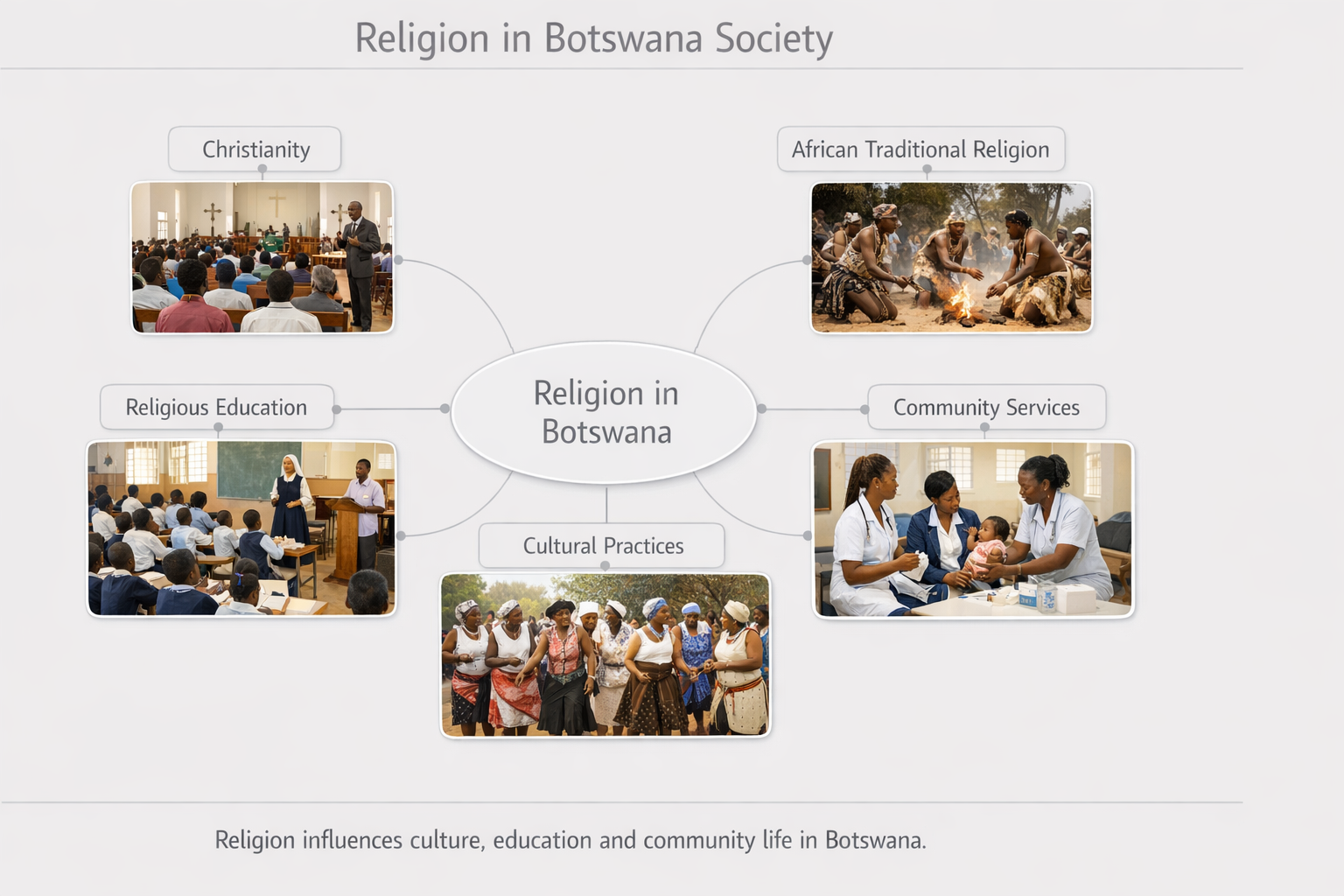
Christianity plays a major role in public life.
African Traditional Religion influences cultural practices.
Religious organisations provide education and health services.
Religious differences can create tension.
Global religious movements influence youth.
Religion remains central to Botswana’s social structure.
Moral formation
Social stability
Cultural continuity
It can create division if misinterpreted.
It may reinforce inequality in some contexts.
Therefore, religion is a powerful social force whose impact depends on how it is practised and regulated within society.
Balanced analysis is required in examinations.
Explain religion – give definition and at least two features.
Discuss importance – provide clear points with explanation and examples.
Evaluate impact – present both positive and negative arguments and conclude with balanced judgement.
Avoid emotional or purely personal opinions.
Giving one-line definitions
Ignoring negative impacts
Writing personal beliefs instead of analysis
Failing to provide balanced discussion
Confusing religion with culture only
State two features of religion.
Explain two ways religion promotes social cohesion.
Explain one limitation of the theological definition of religion.
“Religion is more beneficial than harmful to society.”
Discuss this statement.
Belief in the sacred or divine
Practices or moral teachings
Incomplete answers lack depth.
Provide clear explanation
Show cause-and-effect
Use relevant examples
Present balanced argument
Compare positive and negative effects
Provide structured conclusion
Evaluation requires reasoning, not opinion.


 Google