
Course:
Science Double Awards - 0569

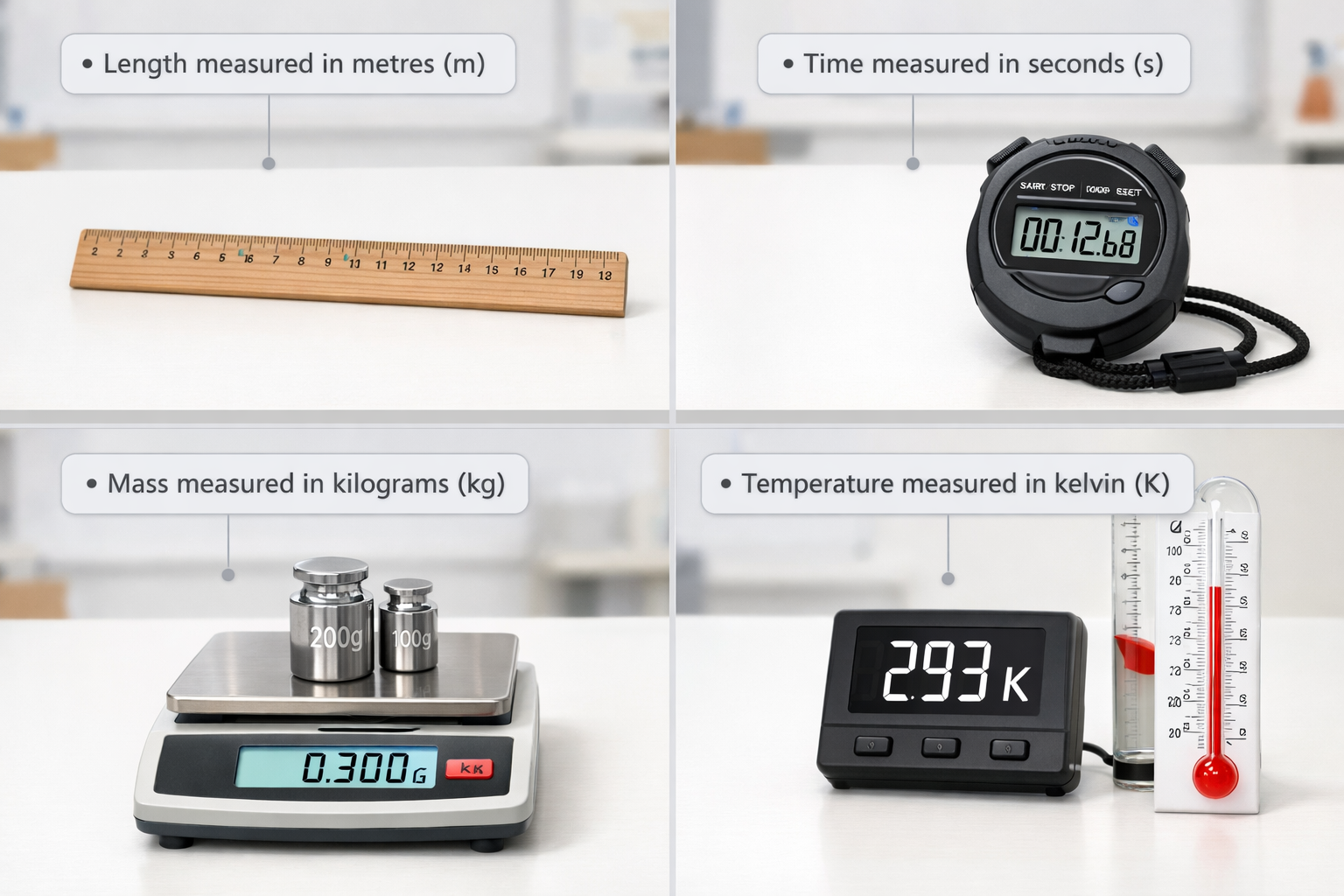
Accurate measurement is an essential part of scientific investigation. In physics, quantities such as length and time must be measured using internationally accepted units known as SI units.
Length is measured in metres (m) and time is measured in seconds (s). Scientists use specialised instruments such as vernier callipers and micrometer screw gauges to measure very small lengths with high accuracy.
Measurements may sometimes contain errors caused by human observation or instrument limitations. Identifying and minimising these errors improves the reliability of experimental results.
One practical experiment used to measure time is determining the period of a pendulum, which is the time taken for one complete swing.
Physical quantities describe measurable properties in science.
These quantities are called fundamental quantities because they are not derived from other measurements.
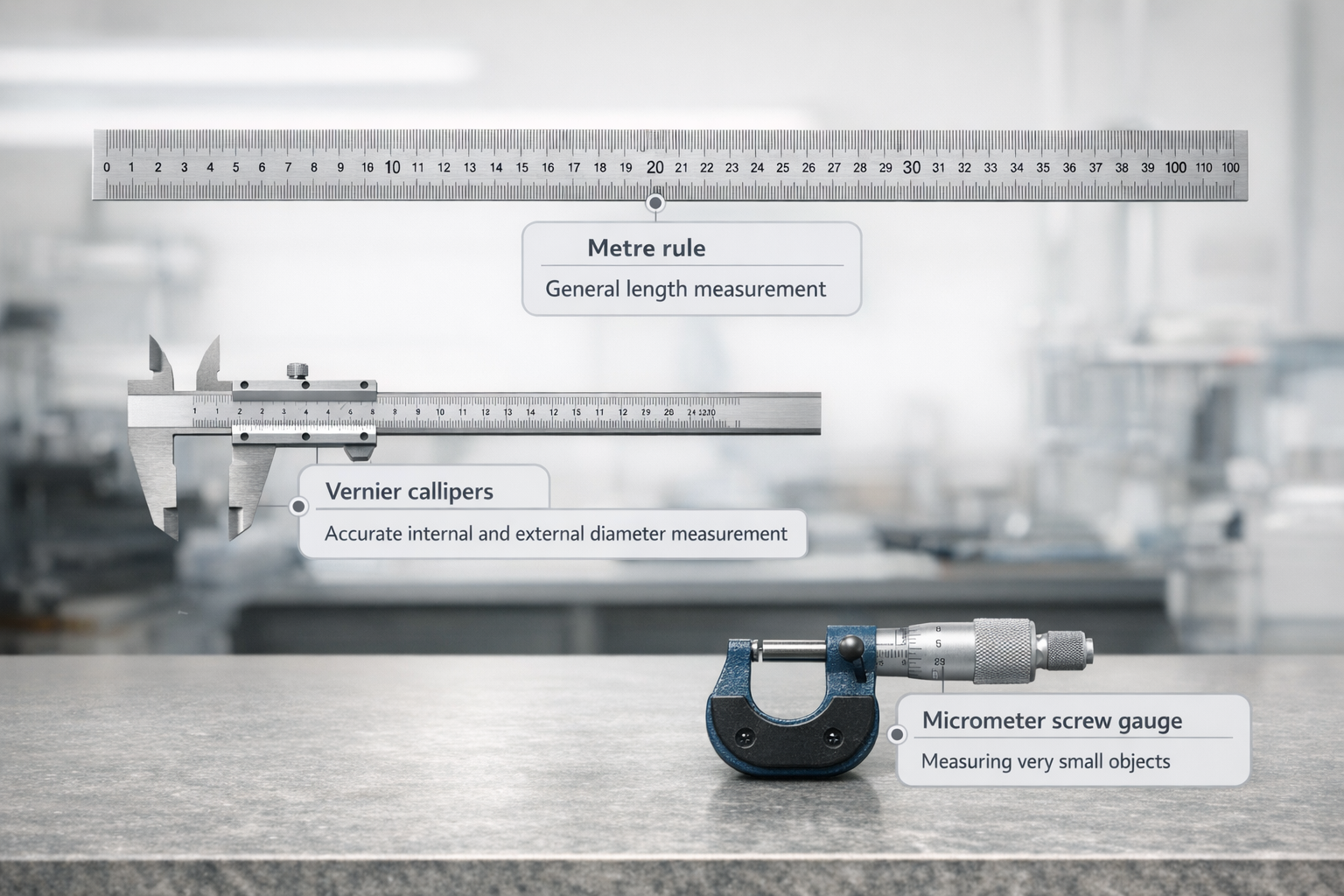
Common instruments used include:
Metre rule
Used for general measurements.
Vernier callipers
Used to measure internal and external diameters accurately.
Typical accuracy: 0.1 mm
Micrometer screw gauge
Used to measure very small objects such as wire diameter.
Typical accuracy: 0.01 mm
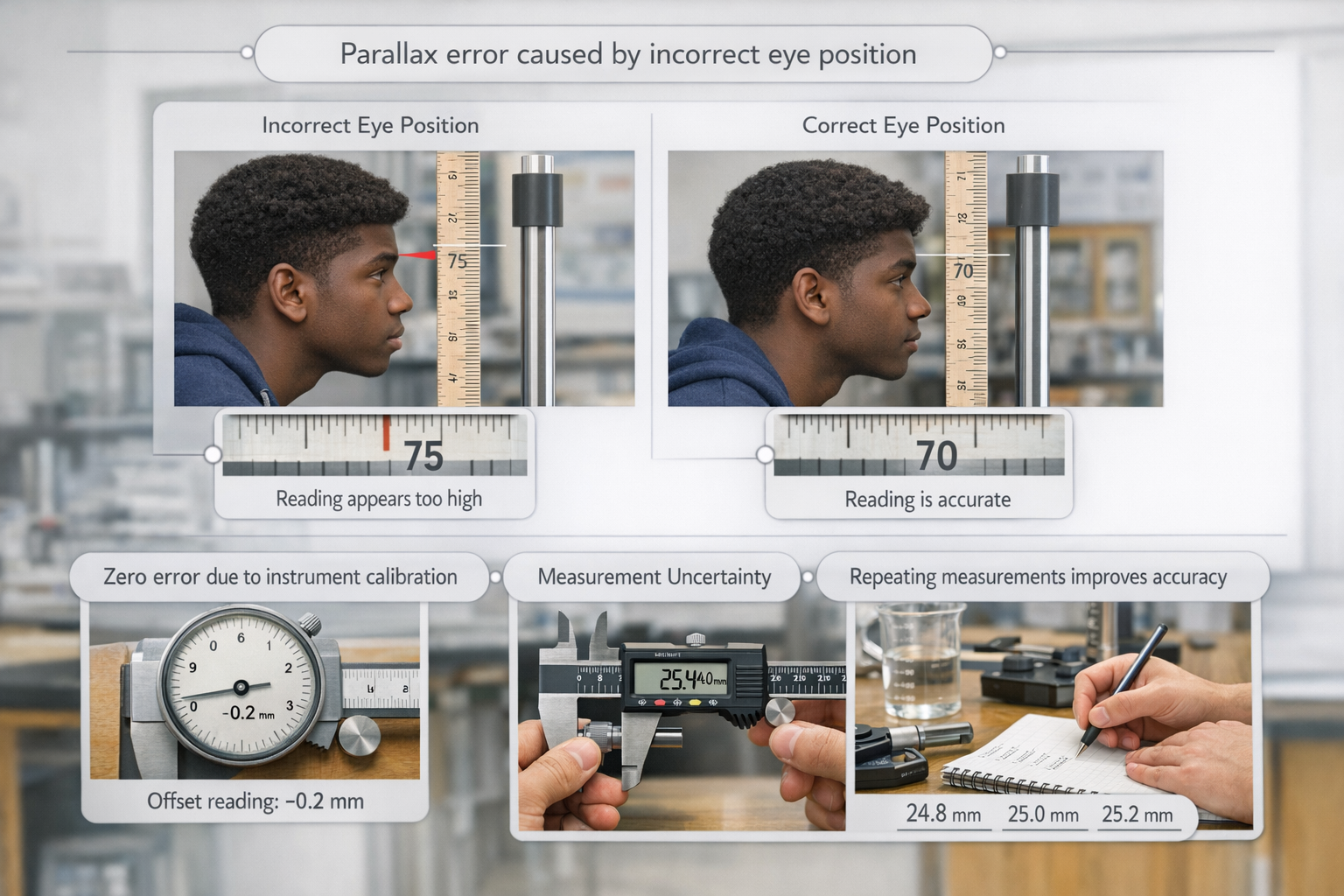
Measurement errors may arise due to:
Instrument errors
worn scale markings
zero error
Human errors
parallax error
reaction time when using a stopwatch
Scientists reduce errors by repeating measurements and calculating averages.
Time is measured using:
stop clocks
stopwatches
digital timers
Accuracy depends on the smallest reading shown by the instrument.
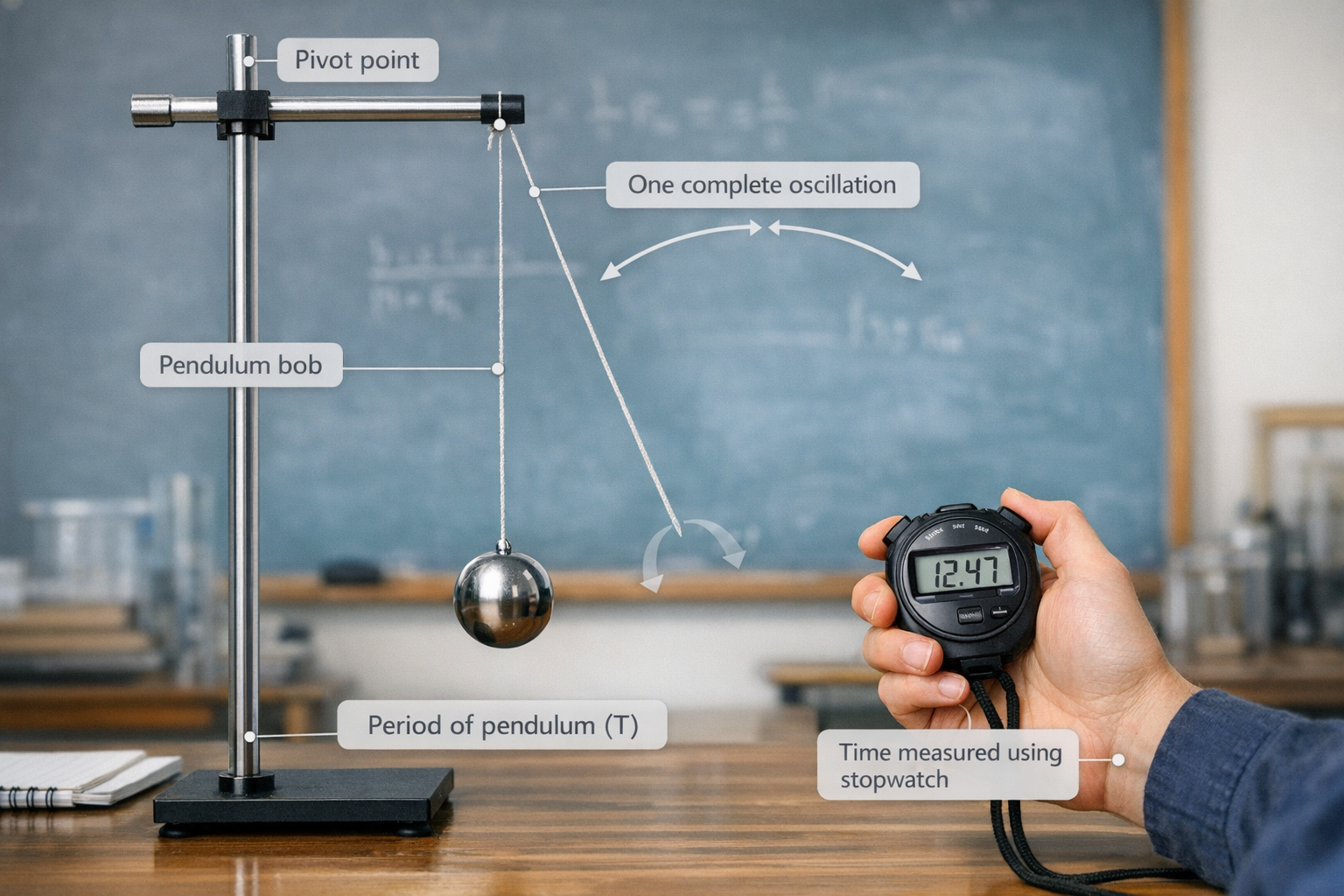
A pendulum consists of a mass attached to a string that swings back and forth.
The period (T) is the time taken for one complete oscillation.
To determine the period:
1 Measure time for several oscillations
2 Divide by the number of oscillations
Example:
Time for 10 oscillations = 12 s
T = 12 ÷ 10
T = 1.2 s

