
Science Double Awards - 0569

- Description
- Curriculum
- Reviews
- Grade
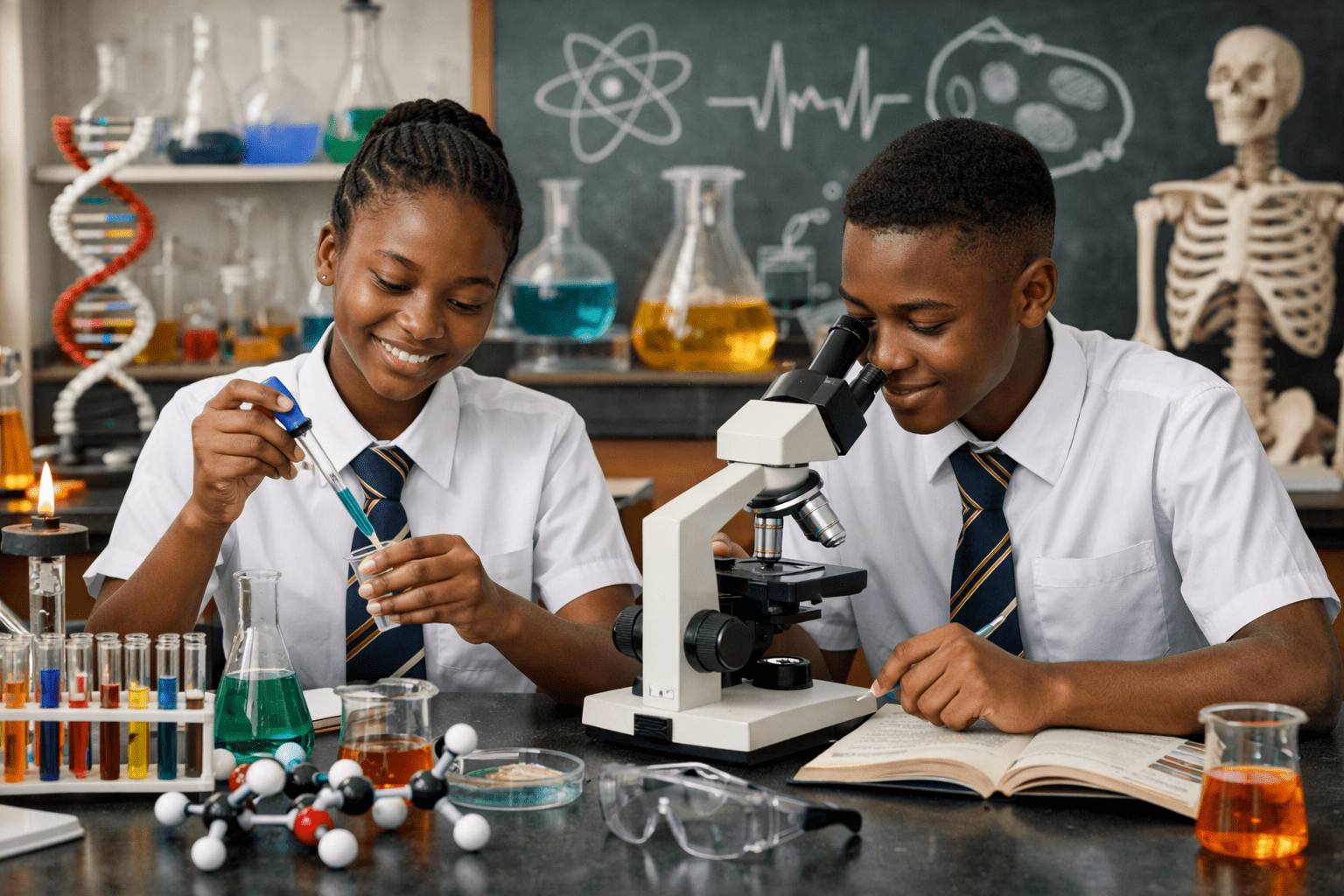
Science Double Award introduces learners to the fundamental principles of Biology, Chemistry, and Physics and helps them understand how scientific knowledge explains the natural world.
This course is designed to support students studying the BGCSE Science Double Award syllabus by providing clear explanations of scientific concepts, structured lessons, and opportunities to apply knowledge through practice questions and quizzes.
Students will explore important scientific topics such as living organisms, chemical reactions, energy, forces, electricity, matter, ecosystems, and environmental sustainability. The course also develops essential scientific skills including observation, investigation, interpretation of results, and problem solving.
Lessons are structured to simplify complex scientific ideas using clear explanations, diagrams, examples, and interactive quizzes. This approach helps learners build confidence and prepare effectively for BGCSE examinations.
By the end of the course, students will have developed a strong understanding of scientific concepts and the ability to apply scientific knowledge in examinations and real-life situations.
-
1
 1.1. Length and Time
In this lesson, learners will explore how scientists measure physical quantities such as length and time using standard units and measuring instruments. The lesson introduces the concept of fundamental physical quantities and explains why the International System of Units (SI units) is used in science to ensure consistency in measurements.
Learners will study different instruments used for measuring small lengths, including the vernier callipers and micrometer screw gauge, and understand how accuracy and precision affect measurements. The lesson also highlights common sources of error in measurement, such as parallax error and instrument limitations.
Finally, learners will investigate how time is measured using stopwatches and how experiments such as the simple pendulum can be used to determine time periods in physics investigations.
-
2
1.2. Motion
In this lesson learners will study motion, which describes how objects move from one position to another over time. Motion can be described using quantities such as distance, displacement, speed, velocity and acceleration.
Learners will explore the difference between uniform and non-uniform motion, and how graphs such as speed–time graphs help scientists analyse motion. The lesson also introduces the equations of motion, which allow calculations involving speed, acceleration and time.
The concept of acceleration due to gravity (g) is introduced to explain why objects accelerate when falling towards the Earth. Learners will also examine the behaviour of objects falling in air and liquids, and understand the concept of terminal velocity, which occurs when a falling object reaches a constant speed.
-
3
1.3. Mass, Weight and Centre of Mass
In this lesson learners will explore the physical quantities mass and weight, and understand how they differ. The lesson explains how mass represents the amount of matter in an object and how it is related to inertia, which is the resistance of an object to changes in motion.
Learners will also study weight, which is the gravitational force acting on an object, and learn how mass and weight are related through gravitational acceleration.
The lesson introduces the concept of the centre of mass, which is the point where the mass of an object appears to be concentrated. Learners will examine how the centre of mass can be determined for regular and irregular shapes, and how it affects the stability of objects.
Understanding these concepts helps explain why some objects balance easily while others topple over.
-
4
1.4.1 (Forces) Effects on Shape and Size
In this lesson learners will study how forces affect the shape and size of objects. When a force is applied to an object, it can cause the object to stretch, compress, bend or change its shape.
Learners will investigate the relationship between load and extension using springs or elastic materials. By gradually increasing the load applied to a spring, the extension can be measured and recorded.
The lesson introduces the use of extension–load graphs, which help scientists understand how materials respond to applied forces. Learners will also learn about the limit of proportionality, which marks the point beyond which the extension of a material is no longer directly proportional to the applied load.
Understanding these concepts is important in engineering and construction where materials must withstand different forces without permanent damage.
-
5
1.4.2 (Forces) Effects on Motion
In this lesson learners will study how forces affect the motion of objects. A force can cause an object to start moving, stop moving, speed up, slow down or change direction.
The lesson introduces Newton’s Second Law of Motion, which states that the force acting on an object is equal to the product of its mass and acceleration. This relationship is expressed as F = ma and allows scientists to calculate the force required to produce a certain acceleration.
Learners will also investigate the role of friction, a force that opposes motion when two surfaces come into contact. Friction affects many everyday situations such as walking, braking vehicles and moving objects across surfaces.
Understanding the effects of forces on motion helps explain how machines, vehicles and structures operate safely and efficiently.
-
6
1.4.3 (Forces) Turning Effects of Forces
In this lesson learners will explore how forces can produce a turning effect on objects. When a force is applied at a distance from a fixed point, it can cause an object to rotate. This turning effect is known as a moment of force.
Learners will examine common examples of turning forces in everyday life such as opening doors, using spanners, and operating seesaws. The lesson also introduces the principle of moments, which explains how objects remain balanced when clockwise and anticlockwise turning effects are equal.
Understanding moments is important in engineering, construction and machine design because it helps explain how tools, machines and structures maintain balance and stability.
-
7
1.5 Energy
In this lesson learners will explore the concept of energy, which is the ability to do work. Energy exists in many forms such as heat, light, electrical, chemical and mechanical energy.
Learners will focus on mechanical energy, particularly kinetic energy and gravitational potential energy, and examine how energy can be transferred or converted from one form to another.
The lesson also introduces the principle of conservation of energy, which states that energy cannot be created or destroyed but only transformed from one form to another.
Finally, learners will examine the major energy sources used in Botswana, such as coal, solar energy and imported electricity, and discuss their economic, social and environmental impacts.
-
8
1.5.1 Work
In this lesson learners will study the concept of work in physics and how it is related to force and motion. Work is done when a force causes an object to move through a distance in the direction of the force.
Learners will explore the relationship between force, distance and work done, and apply the formula W = F × s to solve simple problems.
The lesson also explains how work and energy are closely related, since energy is transferred whenever work is done. Understanding this relationship helps explain many everyday processes such as lifting objects, pushing loads and operating machines.
-
9
1.5.2 Power
In this lesson learners will study the concept of power, which describes how quickly work is done or how fast energy is transferred.
While work measures the amount of energy transferred, power measures the rate at which that work is done. Two people may perform the same amount of work, but the one who does it in less time produces more power.
Learners will learn the relationship between work, time and power using the equation P = W / t. The lesson also explains how power is measured and how it applies to everyday machines such as engines, electric motors and household appliances.
Understanding power helps explain why some machines perform tasks faster and more efficiently than others.
-
10
 End of Unit TestThis quiz covers measurement, SI units, accuracy, error, pendulum motion, distance and displacement, speed, velocity, acceleration, free fall, terminal velocity, mass, weight, inertia, centre of mass, stability, load and extension, Hooke’s law, force, friction, moments, energy, work and power.
-
11
2.1. Thermal Expansion of Matter
In this lesson learners will study thermal expansion, which occurs when materials increase in size as their temperature rises. When matter is heated, the particles gain energy and move more vigorously, causing the substance to expand.
Learners will examine how solids, liquids and gases expand when heated and compare the extent of expansion among these three states of matter. The lesson also explains practical demonstrations used to observe thermal expansion in laboratory experiments.
Finally, learners will explore how thermal expansion affects everyday life and technology. Examples include expansion joints in bridges, gaps in railway tracks, liquid thermometers and thermostats used to control temperature in electrical appliances.
Understanding thermal expansion helps engineers design structures that can safely withstand temperature changes.
-
12
2.2. Measurement of Temperature
In this lesson learners study how temperature is measured using instruments called thermometers. Temperature itself cannot be measured directly, so thermometers rely on physical properties that change with temperature.
Learners will explore how properties such as thermal expansion of liquids and electromotive force (e.m.f.) in thermocouples can be used to measure temperature. The lesson also explains how temperature scales are established using fixed reference points, ensuring that measurements are accurate and consistent.
Finally, learners will study the structure and operation of the liquid-in-glass thermometer, one of the most common temperature measuring devices. The concepts of sensitivity and range will also be introduced to explain how thermometers are designed for different temperature measurements.
Understanding temperature measurement is essential in science, medicine, engineering and everyday life.
-
13
2.3. Melting and Boiling
In this lesson learners will study how substances change from one state of matter to another through the processes of melting, boiling, condensation and solidification. These processes involve the transfer of heat energy, but during the change of state the temperature of the substance remains constant.
Learners will understand why energy is required to change the arrangement of particles rather than increase temperature during melting and boiling. The concepts of melting point and boiling point will also be introduced as fixed temperatures at which substances change state.
The lesson also distinguishes between boiling and evaporation, two processes through which liquids change into gases. Finally, learners will learn how to interpret cooling curves, which show how the temperature of a substance changes as it cools and changes state.
Understanding these concepts is important for studying heat transfer and phase changes in both natural processes and industrial applications.
-
14
2.4. Transfer of Thermal Energy
In this lesson learners will study how thermal energy (heat) is transferred from one place to another. Heat always flows from a region of higher temperature to a region of lower temperature.
There are three main methods of heat transfer: conduction, convection and radiation. Learners will study how these processes occur at the molecular level and how they operate in different states of matter.
The lesson will also explore simple experiments used to demonstrate heat transfer and help learners distinguish between good and poor conductors, emitters and absorbers of heat. Finally, learners will examine how these principles are applied in everyday technologies such as thermos flasks, vehicle cooling systems and water heating systems.
Understanding heat transfer is important in engineering, environmental science and household technology.
-
15
End of Unit TestThis quiz assesses deeper understanding of thermal expansion, temperature measurement, changes of state and heat transfer. It focuses on application, reasoning and interpretation rather than direct recall.
-
16
3.1. General Wave Properties
In this lesson learners will study the fundamental properties of waves, which are disturbances that transfer energy from one place to another without the permanent movement of matter.
Learners will explore the main characteristics used to describe waves, including wavelength, frequency, amplitude and wave speed. The lesson also introduces the wave equation, which relates these quantities and allows scientists to calculate how fast waves travel.
Learners will study graphical representations of waves using displacement–time graphs and displacement–distance graphs, which help explain how waves move through space and time.
Finally, the lesson explains the difference between transverse and longitudinal waves, along with real-life examples such as water waves, sound waves and light waves.
Understanding wave properties is essential for studying sound, light, radio communication and many modern technologies.
-
17
3.2. Light
In this lesson learners will study how light behaves when it passes from one medium to another, a phenomenon known as refraction. When light travels between materials of different densities, its speed changes, causing the direction of the light ray to bend.
Learners will examine how refraction can be observed through experiments using glass blocks or transparent materials, and how the angles of incidence and refraction are measured. The relationship between these angles leads to Snell’s Law, which explains how the refractive index of a material can be determined.
The lesson also explores important applications of refraction such as real and apparent depth in water, total internal reflection, and the operation of optical fibres used in modern communication systems. Finally, learners will study natural optical phenomena such as mirages, which occur due to the refraction of light in layers of air at different temperatures.
Understanding refraction helps explain many optical technologies used in everyday life.
-
18
3.3. Electro- Magnetic Spectrum
In this lesson learners will study the electromagnetic spectrum, which consists of a range of electromagnetic waves that differ in wavelength and frequency but all travel at the same speed in a vacuum.
Learners will examine the main regions of the spectrum including radio waves, microwaves, infrared, visible light, ultraviolet, X-rays and gamma rays. The lesson explains how these waves are detected and the different ways they are used in communication, medicine and technology.
Learners will also explore the sources of electromagnetic waves and the possible side effects associated with high-energy radiation such as ultraviolet rays, X-rays and gamma rays.
Finally, the lesson introduces the speed of electromagnetic waves in vacuum, commonly known as the speed of light, and explains how the wave equation c = fλ is used to calculate frequency or wavelength.
Understanding the electromagnetic spectrum is important for modern technologies such as radio communication, satellite systems, medical imaging and wireless networks.
-
19
3.4. Sound
In this lesson learners will study sound waves, which are produced when objects vibrate and cause particles in a medium to vibrate. Sound waves are longitudinal waves, meaning that particles vibrate parallel to the direction of wave travel.
Learners will explore the structure of sound waves through compressions and rarefactions, and learn about the range of frequencies that can be heard by humans and other animals. The lesson also explains how ultrasound is used in medicine and technology.
Students will investigate how sound travels through different materials and how the speed of sound varies in gases, liquids and solids. The concept of echoes, caused by reflection of sound waves, will also be introduced.
Finally, learners will study the properties of sound such as loudness, pitch and quality (timbre) and how these affect the way sound is perceived. The lesson concludes with an introduction to acoustics, which explains how multiple reflections of sound influence sound quality in buildings such as theatres and halls.
-
20
4.1. Magnetism
In this lesson learners will study magnetism, a physical phenomenon associated with materials that can attract certain metals and produce magnetic fields. Magnets have two poles, known as the north pole and south pole, and they exert forces on other magnetic materials and magnets.
Learners will explore the properties of magnets and learn how to distinguish between magnetic and non-magnetic materials. The lesson also explains how objects can become magnetised through processes such as stroking with a magnet or using electric current.
Learners will investigate the structure of magnetic fields and how they can be observed using iron filings or a plotting compass. Finally, the lesson explains the differences between iron and steel in magnetic behaviour, and introduces practical applications of magnets, including permanent magnets and electromagnets used in many technologies.
Understanding magnetism is important for studying electric motors, generators and many modern electrical devices.
-
21
4.2. Electricity
In this lesson learners will study electrostatics, which is the study of electric charges at rest. Electrostatic charging occurs when electrons are transferred from one object to another, producing an imbalance of electric charge.
Learners will investigate how objects become electrically charged through simple experiments such as rubbing materials together, and how charged objects interact through forces of attraction and repulsion.
The lesson also introduces the concept of electric fields, which describe the region around a charged object where another charge experiences a force. Learners will examine how electric field lines represent the direction and strength of these forces.
Finally, learners will study practical applications of electrostatics, including lightning and lightning conductors, as well as how materials behave differently depending on whether they are conductors or insulators according to the electron model.
Understanding electrostatics forms the foundation for studying electric circuits, electronics and many modern technologies.
-
22
4.3. Practical Electric Circuitry
In this lesson learners will study practical electrical circuitry, focusing on how electricity is used safely in homes and everyday devices. Electricity powers many systems such as lighting, machines and security systems, making it an essential part of modern life.
Learners will explore the relationship between voltage, current and electrical power, and learn how to calculate the energy used by electrical appliances and the cost of electricity consumption.
The lesson also emphasises electrical safety, including common hazards such as damaged insulation, overheating wires and overloaded sockets. Learners will study how safety devices such as fuses, earthing systems and double insulationprotect users from electric shocks and fires.
Finally, learners will examine household electrical wiring, including how a mains plug is wired, how lighting circuits work and how to diagnose common electrical faults.
Understanding practical electrical circuitry helps learners use electricity safely and efficiently.
-
23
4.4 Electromagnetic Effects
This lesson introduces learners to electromagnetic effects, focusing on how electricity and magnetism interact.
Learners will study electromagnetic induction, which explains how a changing magnetic field can produce an electric current in a conductor. This principle forms the basis of many electrical devices.
The lesson then explores the operation of alternating current (AC) generators, which convert mechanical energy into electrical energy using rotating coils and magnetic fields.
Finally, learners will examine transformers, which are devices used to change voltage levels in electrical power systems. Understanding transformers is important because they make it possible to transmit electricity efficiently over long distances.
These concepts form the foundation of modern electricity generation and power distribution.
-
25
6.1. Particulate Nature of Matter
All matter is made up of tiny particles such as atoms, molecules and ions. The arrangement and movement of these particles determine the state of matter, which may be solid, liquid or gas.
In this lesson learners will explore the particulate nature of matter using the Kinetic Particle Theory, which explains how particles move and interact with each other.
Learners will study how matter changes state when heat energy is added or removed, and how particles move freely in liquids and gases.
The lesson also introduces diffusion, the movement of particles from regions of high concentration to regions of low concentration. Diffusion occurs in fluids such as liquids and gases and depends on factors such as temperature and molecular mass.
Understanding the particulate nature of matter helps learners explain many everyday phenomena such as evaporation, mixing of gases and the spreading of smells.
-
26
6.2. Atomic Structure
Atoms are the basic building blocks of all matter. Every substance in the universe is made up of atoms, which combine to form elements, compounds and mixtures.
In this lesson learners will study the structure of the atom, including the particles that make up atoms: protons, neutrons and electrons. They will also learn how these particles are arranged within the atom.
Learners will explore the meaning of atomic number and mass number, and how scientists represent atoms using atomic symbols.
The lesson also introduces electron arrangement in shells, which explains how electrons are distributed around the nucleus and why elements behave differently in chemical reactions.
Finally, learners will examine isotopes, which are atoms of the same element that have different numbers of neutrons.
Understanding atomic structure is essential because it forms the foundation of chemistry and the periodic table
-
27
6.3. Periodic Table
The periodic table is a systematic arrangement of chemical elements based on their atomic numbers and chemical properties. It allows scientists to classify elements and predict their behaviour.
In this lesson learners will study how elements are arranged in the periodic table into periods (rows) and groups (columns). They will learn how information such as atomic number, element symbols and electron arrangements can be obtained from the table.
Learners will also explore important trends in the periodic table, including how properties change across a period and down a group.
Special attention will be given to key groups such as:
• Group I (alkali metals)
• Group VII (halogens)
• Group VIII or 0 (noble gases)
• Transition Metals
Understanding these patterns helps scientists predict the chemical behaviour of elements.
-
28
6.4 Chemical Bonding
Chemical bonding explains how atoms combine to form molecules and compounds. Atoms bond together in order to achieve a stable electron arrangement, usually similar to that of the noble gases.
In this lesson learners will study two major types of chemical bonding:
• ionic bonding
• covalent bonding
Learners will first examine how atoms form ions by gaining or losing electrons. These ions then attract each other through electrostatic forces to form ionic compounds.
The lesson will also explain how covalent bonds form when non-metal atoms share electrons to achieve stable outer shells.
Learners will learn how to represent molecules using dot-and-cross diagrams, compare the properties of ionic and covalent compounds, and understand the structure of ionic lattices such as sodium chloride.
Understanding chemical bonding is essential because it explains the structure and behaviour of substances in chemistry.
-
29
7.1. Energy Changes
Chemical reactions involve the breaking and forming of chemical bonds, and these processes always involve energy changes.
In this lesson learners will study two major types of energy changes in chemical reactions:
• exothermic reactions
• endothermic reactions
Learners will learn that energy must be absorbed to break bonds and released when bonds are formed. The overall energy change in a reaction depends on the balance between these two processes.
The lesson will also explore common real-life examples of exothermic and endothermic reactions, such as photosynthesis, respiration and combustion.
Understanding energy changes in chemical reactions is important because it helps explain how fuels release energy and how biological processes obtain energy.
-
30
7.2. Rate of Reaction
Chemical reactions occur at different speeds. Some reactions take place very quickly, such as explosions, while others occur slowly, such as rusting.
The rate of reaction describes how fast reactants are converted into products.
In this lesson learners will investigate the factors that affect the rate of chemical reactions, including:
• concentration
• temperature
• surface area
• catalysts
• pressure
These factors influence how frequently reacting particles collide with enough energy to react.
Learners will also study enzymes, which are biological catalysts that speed up reactions in living organisms and in industries such as food production.
Understanding reaction rates is important in many real-life situations, including industrial manufacturing, food preservation and safety in environments where combustible materials are present.
-
31
7.3. Redox Reactions
Redox reactions are chemical reactions that involve the transfer of electrons between substances. In every redox reaction, oxidation and reduction occur simultaneously.
In this lesson learners will study the meaning of oxidation and reduction in terms of electron transfer. They will also learn how certain substances act as oxidising agents or reducing agents during chemical reactions.
Learners will investigate laboratory tests used to identify oxidising and reducing agents, including reactions involving potassium iodide and acidified potassium manganate(VII).
The lesson will also introduce electrolysis, which is the decomposition of substances using electrical energy. Electrolysis is an important industrial process and a key example of redox reactions occurring in an electrical system.
Understanding redox reactions helps explain many important chemical processes such as rusting, corrosion, combustion and electrochemical reactions.
-
32
7.4. Electrolysis
Electrolysis is an important chemical process that uses electrical energy to cause chemical changes. It involves the decomposition of ionic compounds when an electric current passes through a molten substance or an aqueous solution.
In this lesson learners will study the components of an electrolytic cell, including the electrolyte, electrodes and power supply. They will also learn how ions move through the electrolyte and how they are discharged at the electrodes.
Learners will investigate electrolysis using common laboratory examples such as sodium chloride solution, dilute sulphuric acid and copper(II) sulphate solution.
The lesson will also introduce electroplating, a process widely used in industry to coat objects with thin layers of metal.
Understanding electrolysis helps explain important industrial processes such as metal purification, electroplating and extraction of metals.
-
33
7.5. Acids, Bases and Salts
Acids, bases and salts are important substances studied in chemistry because they are involved in many chemical reactions and everyday processes.
In this lesson learners will study the properties of acids and bases, how they react with other substances and how their strength and concentration differ.
Learners will also investigate the pH scale, which measures the acidity or alkalinity of solutions.
The lesson explores how acids react with metals, carbonates and bases to produce salts and other products. Learners will also study how salts can be prepared and purified in the laboratory.
Finally, the lesson introduces qualitative analysis, where chemical tests are used to identify different ions in solutions.
Understanding acids, bases and salts is essential in both laboratory chemistry and real-life applications such as agriculture, medicine and food production.
-
34
8.1. Chemical Formulae and Equations
Stoichiometry is the branch of chemistry that deals with the quantitative relationships between substances involved in chemical reactions.
In this lesson learners will study how elements and compounds are represented using chemical symbols and formulae. They will also learn how to determine compound formulae using ion charges and chemical models.
Learners will then explore chemical equations, which are used to represent chemical reactions. These equations must be balanced to obey the law of conservation of mass, meaning that the number of atoms of each element must be the same on both sides of the equation.
The lesson also introduces state symbols and ionic equations, which help chemists represent reactions more clearly and accurately.
Understanding chemical formulae and equations is fundamental to studying chemical reactions, stoichiometry and quantitative chemistry.
-
35
8.2 Chemical Calculations
Chemical calculations are used to determine the quantities of substances involved in chemical reactions. These calculations help chemists predict how much product will form or how much reactant is required for a reaction.
This lesson introduces the concept of the mole, which allows chemists to count extremely small particles such as atoms, molecules and ions. Learners will study how to calculate relative atomic mass (Ar) and relative molecular mass (Mr).
The lesson also explores how to convert between mass, moles and volume, particularly for gases and solutions.
Learners will also investigate empirical and molecular formulae, percentage composition, reaction yields and solution concentrations.
These skills are essential for solving many quantitative chemistry problems in examinations and practical laboratory work.
-
36
9.1. Properties of Metals
Metals are among the most widely used materials in everyday life. They are used in construction, manufacturing, transportation and electrical systems.
In this lesson learners will study the general physical and chemical properties of metals, such as conductivity, malleability and reactivity.
The lesson introduces the reactivity series, which ranks metals according to how easily they lose electrons to form positive ions. This series helps predict how metals react with water, acids and other substances.
Learners will also explore how metals are extracted from ores, including the extraction of iron from haematite in a blast furnace.
The lesson also explains alloys, which are mixtures of metals designed to improve strength, durability or corrosion resistance.
Understanding metals and their properties is essential for explaining many industrial processes and everyday applications.
-
37
9.2. Non-Metals
Non-metals are a group of elements that have physical and chemical properties different from those of metals. They are found in various forms in nature and play an important role in many chemical reactions and biological processes.
In this lesson learners will study the general physical properties of non-metals, including their appearance, conductivity and physical state. Unlike metals, non-metals are usually poor conductors of heat and electricity and often have lower melting and boiling points.
Learners will also explore examples of common non-metals such as oxygen, nitrogen, sulphur and carbon, and observe how their physical properties differ from those of metals.
Understanding the properties of non-metals helps learners explain the behaviour of many substances and their uses in everyday life.
-
38
9.2.1 Chlorine
Chlorine is an important non-metal that plays a significant role in water treatment, sanitation and industrial production. In this lesson learners will study the preparation, properties and uses of chlorine gas.
Learners will explore how chlorine can be prepared in the laboratory using concentrated hydrochloric acid and an oxidising agent, and how the gas can be identified using a simple chemical test.
The lesson also examines the bleaching action of chlorine, which makes it useful in cleaning agents and disinfectants.
In addition, learners will investigate the importance of sodium chloride (common salt) as a raw material for producing chlorine and other chemicals.
Special attention is given to Botswana Ash (Botash) in Sowa Town, where sodium chloride is obtained from brine in the salt pans and processed for industrial use.
Understanding these processes helps learners connect chemistry concepts with local industrial activities in Botswana.
-
39
9.2.2 Carbon and Carbonates
Carbon is an important non-metal element that exists in different structural forms known as allotropes. The two most common allotropes are diamond and graphite, which have very different physical properties despite both being made entirely of carbon atoms.
In this lesson learners will explore the concept of allotropy and understand how the structure of carbon atoms determines the properties and uses of these materials.
Learners will also examine the diamond mining process in Botswana, one of the country’s most important economic activities.
Finally, the lesson introduces important carbonate compounds such as sodium carbonate and calcium carbonate, which are widely used in industry and everyday life.
Understanding carbon and carbonates helps learners link chemistry concepts with natural resources and industries in Botswana.
-
40
9.2.3 Nitrogen
Nitrogen is an important non-metal element that makes up about 78% of the Earth’s atmosphere. Although nitrogen gas is very abundant, it is relatively unreactive and must be converted into useful compounds before it can be used by plants, animals and industries.
In this lesson learners will study the production of ammonia, one of the most important nitrogen compounds used in industry. Ammonia is produced using nitrogen and hydrogen in an industrial process known as the Haber process.
Learners will identify the sources of nitrogen and hydrogen used in this process and explore the many uses of ammonia in agriculture and manufacturing.
Understanding nitrogen chemistry is important because ammonia plays a major role in the production of fertilisers, which help increase crop yields and support food production worldwide.
-
41
10.1. Water
Water is one of the most important substances on Earth and is essential for life. In this lesson learners will investigate the physical properties of pure water and learn how to test for the presence of water using chemical methods.
The lesson also explores the concept of hard water, which occurs when certain dissolved mineral salts are present. Learners will study the difference between temporary hardness and permanent hardness, how water hardness is measured and how hard water can be softened.
In addition, learners will examine the role of detergents in cleaning and how some chemicals can lead to water pollution.
The lesson also introduces the concept of Biological Oxygen Demand (BOD), which is used to measure the level of pollution in water bodies.
Understanding water chemistry helps learners appreciate the importance of clean water for health, agriculture and the environment.
-
42
10.2. Air
Air is a mixture of gases that surrounds the Earth and is essential for life. In this lesson learners will study the composition of air, including the percentages of nitrogen, oxygen and other gases.
Learners will examine how important gases such as oxygen and nitrogen are separated from air using fractional distillation.
The lesson also explores the impact of increasing carbon dioxide levels in the atmosphere, which contributes to global warming and climate change.
In addition, learners will investigate air pollution, including the major pollutants, their sources and their effects on human health, vegetation and buildings.
Finally, the lesson discusses methods used to control air pollution, such as catalytic converters and the use of unleaded petrol.
Understanding air chemistry helps learners appreciate the importance of protecting the atmosphere and the environment.
-
43
10.3 Recycling
Modern industries, including the chemical industry, produce many useful products such as plastics, fuels, fertilisers and medicines. However, industrial activities can also create environmental problems if waste products are not properly managed.
In this lesson learners will study some of the environmental problems caused by the chemical industry, including pollution of air, water and land.
Learners will also explore the concept of recycling, which is an important method used to reduce waste and conserve natural resources.
The lesson introduces different types of recyclable materials, such as metals, plastics, glass and paper, and explains how recycling helps protect the environment and reduce the amount of waste sent to landfills.
Understanding recycling encourages responsible use of resources and helps support sustainable development.
-
44
10.4. Sources of Energy
Energy is required for many activities in daily life such as cooking, transportation, heating and electricity generation. Different sources of energy are used to meet these needs.
In this lesson learners will study fossil fuels, including coal, petroleum and natural gas, and understand how their use relates to their limited natural reserves.
Learners will also compare different fuels based on their efficiency, environmental impact and availability.
The lesson explores energy conservation practices that can be used in homes to reduce energy consumption.
Finally, learners will investigate alternative energy sources, including the use of plant and animal waste to produce fuels such as biogas.
Understanding different energy sources helps learners appreciate the importance of sustainable energy use and environmental protection.
-
45
11.1. Homologous Series
Carbon is a unique element because its atoms can bond with each other to form long chains and complex structures. This property allows carbon to form a very large number of compounds known as organic compounds.
In this lesson learners will study homologous series, which are families of organic compounds that share similar chemical structures and properties.
Learners will explore common homologous series such as alkanes, alkenes and alkanols, and learn how to identify their structures.
The lesson also introduces structural isomerism, where compounds have the same molecular formula but different structural arrangements.
Understanding homologous series helps learners organise and predict the behaviour of many carbon compounds.
-
46
11.1.1 Alkanes
Alkanes are a group of hydrocarbons that belong to the homologous series of saturated organic compounds. They contain only single carbon–carbon bonds and are commonly found in natural fuels such as natural gas and petroleum.
In this lesson learners will study the chemical reactions of alkanes, including combustion and substitution reactions with chlorine.
Learners will also explore the industrial importance of petroleum, which is a mixture of many hydrocarbons. Petroleum is separated into useful fractions using a process called fractional distillation.
Each fraction obtained from petroleum has different boiling points and is used for different purposes, including fuels, lubricants and road construction.
Understanding alkanes helps learners understand how energy resources such as petroleum and natural gas are used in everyday life.
-
47
11.1.2 Alkenes
Alkenes are a homologous series of unsaturated hydrocarbons that contain at least one carbon–carbon double bond. Because of this double bond, alkenes are more chemically reactive than alkanes.
In this lesson learners will study how alkenes are produced through the cracking of long-chain hydrocarbons obtained from petroleum.
Learners will explore the chemical properties of alkenes, including addition reactions with bromine, hydrogen and steam.
The lesson also explains how alkenes can be used to manufacture polymers, particularly polythene, through a process called addition polymerisation.
Understanding alkenes is important because they are widely used in the chemical industry to produce plastics and other synthetic materials.
-
48
11.1.3 Alkanols
Alkanols, commonly known as alcohols, are organic compounds that contain the hydroxyl functional group (–OH)attached to a carbon atom.
In this lesson learners will study ethanol, one of the most important alkanols. Ethanol can be produced naturally through fermentation of sugars using yeast, a process widely used in brewing and baking industries.
Learners will also explore the industrial production of ethanol from ethene, which uses catalytic hydration.
The lesson examines the chemical and physical properties of ethanol, including combustion and oxidation reactions.
Finally, learners will study the many practical uses of ethanol, which include fuels, solvents and alcoholic beverages.
Understanding alkanols helps learners appreciate how organic chemistry is applied in industry, food production and energy sources.
-
49
11.1.4 Alkanoic Acids
Alkanoic acids are organic compounds that contain the carboxyl functional group (–COOH). These compounds are commonly known as organic acids because they produce acidic solutions in water.
In this lesson learners will study some naturally occurring organic acids, including tartaric acid, citric acid and ascorbic acid. These acids are commonly found in foods such as fruits and vegetables.
Learners will also explore ethanoic acid, one of the most important alkanoic acids, which is found in vinegar.
The lesson introduces ester formation, a reaction between an alkanoic acid and an alcohol. In this process ethanoic acid reacts with ethanol to produce ethyl ethanoate, an ester with a pleasant fruity smell.
Understanding alkanoic acids and ester formation helps learners understand how many flavours, fragrances and food chemicals are produced.
-
50
11.2 Macromolecules
Macromolecules are very large molecules formed by joining many small units together. These small units are known as monomers, and when many monomers join together they form polymers.
Macromolecules are extremely important in both living organisms and industrial materials. In nature, substances such as starch and fats are examples of macromolecules used for storing energy and building structures in living organisms.
In industry, many materials such as nylon and polyester are synthetic macromolecules used to produce textiles, plastics and other useful materials.
In this lesson learners will explore how large macromolecules are formed from small repeating units and examine examples from both natural and synthetic polymers.
Understanding macromolecules helps learners appreciate how modern materials and biological molecules are structured.
-
51
11.2.1 Synthetic Macro Molecules
Synthetic macromolecules are large molecules manufactured by chemical industries through polymerisation reactions. These materials are commonly known as plastics and synthetic fibres.
Many everyday materials such as plastic containers, clothing fibres, packaging materials and pipes are made from synthetic polymers. Examples include polyvinyl chloride (PVC), polystyrene and polypropene.
Although these materials are useful because they are strong, lightweight and durable, many of them are non-biodegradable, meaning they do not easily break down in the environment. This creates serious pollution problems.
In this lesson learners will explore the formation, properties, uses and environmental impacts of synthetic macromolecules. Learners will also compare synthetic fibres and natural fibres and examine the formation of important synthetic polymers such as nylon and terylene.
Understanding synthetic macromolecules helps learners appreciate the role of chemistry in modern manufacturing and environmental management.
-
52
11.2.2 Natural Macromolecules
Natural macromolecules are large molecules found in living organisms. These substances are essential components of food and play an important role in energy storage, body structure and biological processes.
The three main natural macromolecules present in food are proteins, fats and carbohydrates. Each of these macromolecules is made from smaller molecular units joined together through chemical bonds.
Proteins are formed from amino acids, carbohydrates are formed from sugar units, and fats are formed from fatty acids and glycerol.
During digestion, large macromolecules are broken down through hydrolysis reactions into smaller molecules that the body can absorb.
Understanding natural macromolecules helps learners understand nutrition, digestion and the chemistry of biological systems.
-
54
13.1. Nutrition
Living organisms must obtain essential materials such as food, water, oxygen and nutrients in order to survive and grow.
Plants obtain nutrients through photosynthesis, a process in which light energy is used to produce food from carbon dioxide and water.
Animals and humans obtain nutrients by consuming food, which is broken down in the digestive system through mechanical and chemical digestion.
Food molecules such as carbohydrates, proteins and fats are broken down into smaller units that can be absorbed into the bloodstream and transported to different parts of the body.
Enzymes play an important role in digestion because they speed up chemical reactions in the body.
Understanding how living organisms obtain and process nutrients helps explain how energy is produced, how cells grow and how the body maintains life processes.
-
55
13.2. Respiration
Respiration is one of the most important processes in living organisms. It is the process by which energy is released from food molecules inside cells.
This energy is used to power many essential activities in the body, such as movement, growth, repair of tissues and transport of substances across cell membranes.
Respiration occurs in all living organisms and takes place in two main forms: aerobic respiration and anaerobic respiration.
Aerobic respiration occurs in the presence of oxygen and releases a large amount of energy. Anaerobic respiration occurs without oxygen and releases less energy.
In animals, anaerobic respiration produces lactic acid, while in plants and microorganisms such as yeast it produces ethanol and carbon dioxide.
Understanding respiration helps explain how organisms obtain energy for life processes.
-
56
13.3. Transport and Circulation
Transport systems are essential for distributing substances such as water, nutrients, oxygen and waste productsthroughout living organisms.
In plants, water and minerals are transported from the roots to the leaves through xylem vessels, while food produced during photosynthesis is transported through phloem.
The loss of water from leaves through stomata, known as transpiration, helps drive the movement of water through plants.
In animals and humans, substances are transported through the circulatory system, which consists of the heart, blood vessels and blood.
The heart acts as a pump that circulates blood throughout the body through two main circuits: the pulmonary circuit and the systemic circuit.
Blood carries oxygen, nutrients and hormones to body cells and removes waste products such as carbon dioxide and urea.
Understanding transport systems explains how organisms maintain efficient distribution of essential materials necessary for life processes.
-
57
14.1. Homeostasis
Living organisms must maintain stable internal conditions in order for cells and organs to function properly. This process is known as homeostasis.
Homeostasis helps regulate important factors such as body temperature, water balance and chemical composition of body fluids. Maintaining these conditions ensures that enzymes and metabolic processes operate efficiently.
One of the most important aspects of homeostasis in humans is the regulation of body temperature. The human body maintains a constant temperature of approximately 37°C, even when external environmental conditions change.
The skin plays an important role in temperature regulation through structures such as sweat glands, blood vessels and sensory receptors. These structures detect temperature changes and respond accordingly.
The brain, particularly the hypothalamus, acts as the control centre that coordinates responses such as sweating or shivering to maintain a stable body temperature.
Understanding homeostasis explains how the body maintains stable internal conditions necessary for survival.
-
58
14.2. Excretion
Living organisms constantly produce waste products during metabolic activities such as respiration and protein metabolism. These waste substances can become harmful if they accumulate in the body.
The process by which organisms remove these harmful substances is called excretion. Excretion helps maintain a stable internal environment and is therefore an important part of homeostasis.
In humans, the main organs responsible for excretion are the kidneys, which form part of the urinary system. The kidneys filter the blood and remove waste products such as urea, excess salts and excess water.
The urinary system includes the kidneys, ureters, bladder and urethra, which work together to produce, transport and eliminate urine.
When kidneys fail to function properly, dialysis machines can be used to remove waste products from the blood artificially.
Understanding the excretory system helps explain how the body maintains chemical balance and removes toxic metabolic wastes.
-
59
15.1. Nervous System
Living organisms constantly receive information from their environment and must respond appropriately in order to survive. These responses are controlled by the nervous system, which detects stimuli and coordinates actions in the body.
The nervous system works through a network of specialised cells called neurones, which transmit electrical impulses between different parts of the body.
The process begins when sensory receptors in sense organs detect changes in the environment. These signals are transmitted through sensory neurones to the central nervous system, where the information is processed.
The brain or spinal cord then sends signals through motor neurones to effector organs such as muscles or glands, which produce a response.
Some responses occur automatically and rapidly through reflex actions, which protect the body from harm.
Understanding the nervous system helps explain how organisms detect stimuli, process information and coordinate responses.
-
60
15.2. Hormonal Co- ordination
Hormonal coordination is another important system that helps the body respond to internal and external changes. Unlike the nervous system, which sends rapid electrical signals through nerves, the endocrine system uses chemical messengers called hormones that travel in the blood to reach target organs.
Hormones are produced by special glands called endocrine glands. These glands release hormones directly into the bloodstream where they are transported to specific organs or tissues in the body. Hormones control many important body processes such as growth, metabolism, blood sugar regulation, and responses to stress.
In this lesson, learners will understand what hormones are, identify the major endocrine glands in the human body, and examine the functions of important hormones such as insulin, glucagon, and adrenaline. The lesson will also compare the nervous system and endocrine system to show how the two systems work together to coordinate body functions.
-
61
15.3. The Use and Abuse of Drugs
Drugs are substances that can affect how the body works by altering chemical reactions within the body. Some drugs are used for medical purposes to treat diseases and relieve pain, while others are misused and can cause serious harm to the body and society.
Medicinal drugs are prescribed by healthcare professionals to help treat illnesses and improve health. Examples include antibiotics, painkillers, and antacids. However, misuse of drugs can lead to dependence, tolerance, and harmful side effects.
In contrast, non-medicinal drugs, often referred to as drugs of abuse, affect the central nervous system and may cause physical, emotional, and social problems. These drugs can be classified as depressants, stimulants, and hallucinogens, depending on how they affect the brain and nervous system.
This lesson explores the differences between medicinal and non-medicinal drugs, the beneficial uses of drugs in medicine, and the dangers associated with drug abuse, including the harmful effects of alcohol on the body.
-
62
16.1. Forms of Reproduction
Reproduction is an essential life process that allows living organisms to produce new individuals of the same species. Through reproduction, species continue to exist and populations are maintained across generations.
There are two main forms of reproduction: asexual reproduction and sexual reproduction. In asexual reproduction, only one parent is involved and the offspring produced are genetically identical to the parent. In contrast, sexual reproduction involves the fusion of reproductive cells from two parents, resulting in offspring that are genetically different.
Many plants reproduce asexually through methods such as stem cuttings and grafting, which are widely used in agriculture to produce crops with desirable characteristics. Sexual reproduction, on the other hand, promotes genetic variation which is important for the survival and adaptation of species.
In this lesson, learners will explore the different forms of reproduction, examine examples of asexual reproduction in plants and animals, and understand how sexual reproduction leads to genetic diversity.
-
63
16.2. Sexual reproduction in Flowering Plants
Flowering plants reproduce sexually through specialised reproductive structures found in the flower. The flower contains male and female reproductive organs that produce reproductive cells known as gametes. When these gametes fuse, fertilisation occurs and a new plant can develop.
The process of reproduction in flowering plants involves several stages including pollination, fertilisation, seed formation, and seed germination. Pollination occurs when pollen grains are transferred from the anther to the stigma. After pollination, the pollen grain grows a pollen tube which carries the male nucleus to the ovule, where fertilisation takes place.
Following fertilisation, the ovule develops into a seed while the ovary develops into a fruit. Seeds contain an embryo that can grow into a new plant when environmental conditions such as water, oxygen, and suitable temperature are available.
In this lesson, learners will examine the structure of flowers, understand the types of pollination, study the process of fertilisation, and explore how seeds germinate to form new plants.
-
64
16.3. Sexual Reproduction in Mammals
Sexual reproduction in mammals involves the production of specialised reproductive cells called gametes by male and female reproductive organs. In males, the testes produce sperm cells, while in females the ovaries produce egg cells (ova). When a sperm cell fuses with an egg cell during fertilisation, a zygote is formed, which develops into a new individual.
Mammalian reproduction involves several important stages including the production of gametes, fertilisation, development of the embryo, and birth. The reproductive systems of males and females contain specialised organs that support these processes.
The female reproductive system also undergoes a regular cycle known as the menstrual cycle, which prepares the body for possible pregnancy. If fertilisation occurs, the embryo develops in the uterus where it receives nutrients and oxygen from the mother through the placenta and umbilical cord.
This lesson explores the structure and functions of male and female reproductive systems, the process of fertilisation and early embryo development, methods of birth control, and the causes and prevention of sexually transmitted diseases.
-
65
17.1. Ecology
Ecology is the study of how living organisms interact with one another and with their environment. All living things depend on the environment for energy, nutrients, and suitable living conditions. These interactions form complex systems known as ecosystems.
The sun is the main source of energy for almost all biological systems on Earth. Plants capture energy from sunlight during photosynthesis and convert it into chemical energy stored in food. This energy then passes through ecosystems as organisms feed on plants and other organisms.
Human activities such as poor agricultural practices, pollution, and environmental mismanagement can damage ecosystems and reduce biodiversity. Practices such as deforestation, overgrazing, monoculture farming, and excessive use of fertilisers and pesticides can disrupt natural ecological balance.
In this lesson, learners will explore how energy flows through ecosystems, understand environmental problems such as eutrophication and pollution, and examine how human activities affect ecosystems.
-
66
17.2 Conservation
Conservation is the protection and sustainable management of natural resources, including plants, animals, and ecosystems. Many species are threatened by human activities such as habitat destruction, pollution, overexploitation, and climate change. Conservation efforts aim to protect these species and ensure that natural resources are available for future generations.
Botswana is home to many important plant and animal species that require conservation. Local plants such as mosukujane, sengaparile, monepenepe, and mowana play important roles in traditional medicine, food production, and ecological balance. Similarly, animals such as rhinos, wild dogs, and cheetahs are important parts of Botswana’s wildlife heritage and contribute significantly to tourism.
Conservation also involves responsible management of resources through practices such as recycling materials, reducing waste, and protecting ecosystems. Recycling materials like paper, bottles, tins, and sewage water helps reduce pollution and conserve natural resources.
In this lesson, learners will examine the importance of species conservation and understand how sustainable practices help protect the environment.
This subject is designed to support students studying the BGCSE Science Double Award syllabus by providing clear explanations of scientific concepts, structured lessons, and opportunities to apply knowledge through practice questions and quizzes.
Students will explore important scientific topics such as living organisms, chemical reactions, energy, forces, electricity, matter, ecosystems, and environmental sustainability. The subject also develops essential scientific skills including observation, investigation, interpretation of results, and problem solving.
Lessons are structured to simplify complex scientific ideas using clear explanations, diagrams, examples, and interactive quizzes. This approach helps learners build confidence and prepare effectively for BGCSE examinations.
• Have completed Junior Secondary Science or equivalent
• Be willing to read lesson notes and attempt quizzes
• Have access to a computer, tablet, or smartphone with internet connection
• Have a calculator for solving certain scientific problems
• Be ready to practise scientific reasoning and problem solving
• BGCSE students studying Science Double Award
• Senior secondary school learners preparing for Science examinations
• Students who want to strengthen their understanding of scientific concepts
• Learners preparing for revision and exam practice
• Anyone interested in improving their knowledge of Biology, Chemistry, and Physics