
Religious Education – 0588

- Description
- Curriculum
- Reviews
- Grade
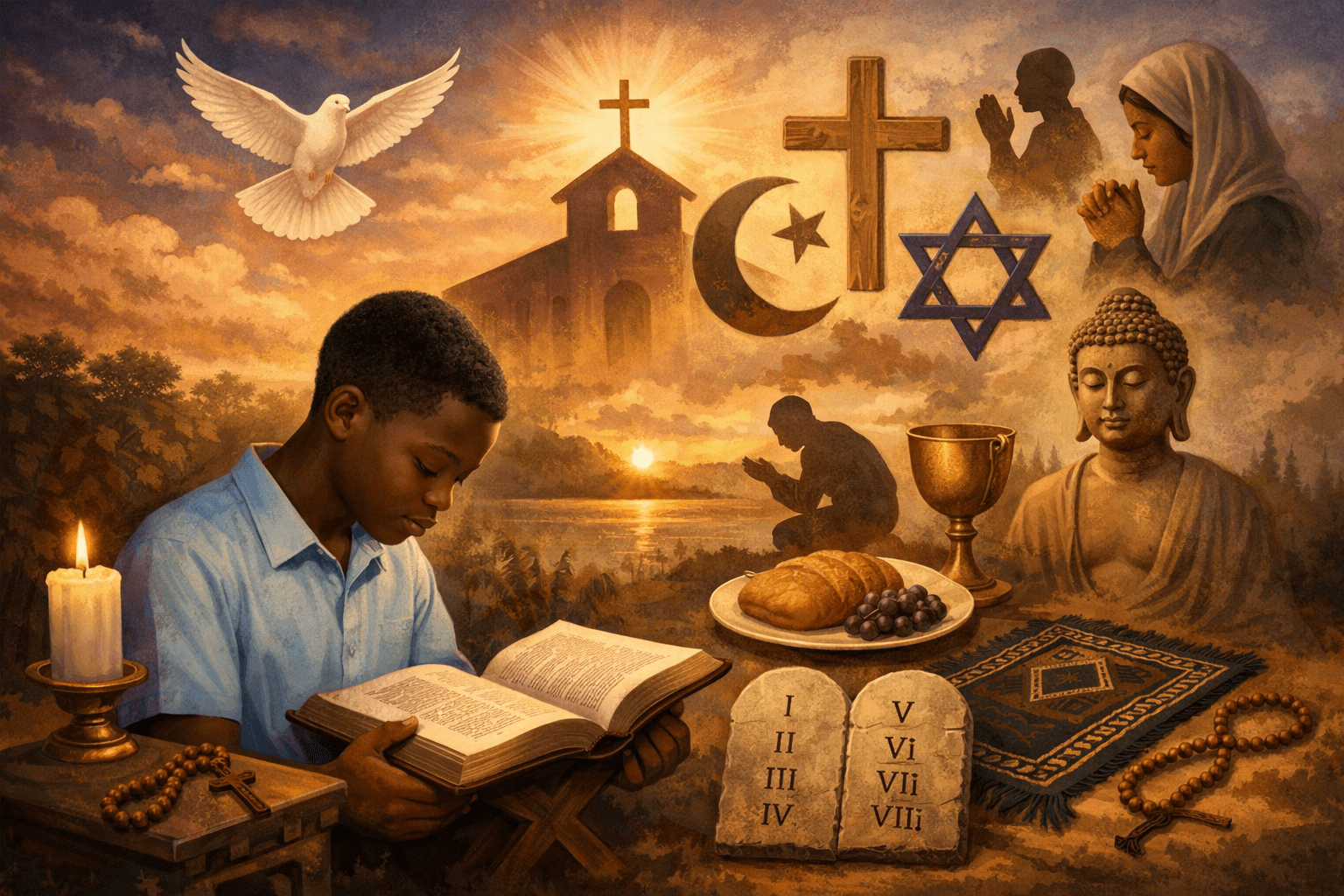
The BGCSE Religious Education subject is designed to develop deep understanding of religion from historical, ethical, social and global perspectives. Aligned with the Botswana Examinations Council syllabus (0588) , this subject prepares learners for both structured and essay-based examination papers.
The subject develops mastery in:
-
The nature and dimensions of religion
-
African Traditional Religion in Botswana
-
The impact of Christianity on Botswana’s development
-
Christian values in contemporary society
-
Human relationships in ATR and Christianity
-
World religions in Botswana
-
Religion and global issues
Learners are trained to:
-
Demonstrate knowledge and understanding of religious concepts
-
Apply religious teachings to contemporary Botswana
-
Analyse and evaluate religious responses to ethical and global issues
-
Construct balanced, well-reasoned essays
This subject builds not only examination excellence but moral reasoning, critical thinking and cultural awareness — skills essential for leadership and responsible citizenship.
-
1
 The Nature and Role of Religion in Society
This lesson examines the meaning of religion and explores its role in society. It analyses the theological definition of religion and evaluates both the positive and negative impact of religion in social development.
-
2
Dimensions of Religion
This lesson examines the dimensions of religion as identified by Ninian Smart. It compares Oriental and Judeo-Christian religions, analyses common features of African Traditional Religion (ATR) and Hinduism, evaluates how ethical teachings promote social harmony, and discusses distinctive features of Buddhism and the Baha’i Faith.
-
3
Origins of Different Religions
This lesson identifies religions found in Botswana and examines the socio-economic and political factors that led to the origins of Christianity, the Baha’i Faith, Sikhism and Islam. It also discusses reasons for the proliferation of religions in Botswana.
-
4
 End of Unit Test
-
5
The Nature of African Traditional Religion
This lesson explains the concept of African Traditional Religion (ATR) and examines how it expresses itself within Botswana society. It analyses the beliefs, practices and cultural foundations of ATR and evaluates its continued relevance in modern Botswana.
-
6
The Diverse Manifestations of African Traditional Religion in Botswana
This lesson identifies the key beliefs and practices of African Traditional Religion (ATR) in Botswana. It explains how ATR shows both unity and diversity across different ethnic groups and analyses the relevance of ATR beliefs and practices in contemporary Botswana.
-
7
Sacred Objects and Places
This lesson explains the concept of sacredness in African Traditional Religion (ATR) and examines the significance of sacred places and objects in Botswana. It discusses taboos associated with sacred elements, evaluates the impact of modern development on sacred sites, and explains the meaning and role of totemism in contemporary Botswana.
-
8
The Teachings of African Traditional Religion in Botswana
This lesson examines the teachings of African Traditional Religion (ATR) concerning the origin, purpose and meaning of life. It explores the role of human beings in the cosmos, the position of men and women, the moral framework of ATR, and the importance of Botho in Botswana society. It also evaluates how ATR teachings influence gender relationships in modern Botswana.
-
9
End of Unit Test
-
10
The Coming of Christianity in Botswana
This lesson examines the arrival of Christianity in Botswana. It identifies early missionaries and mission stations, explains how Christianity was spread, analyses the challenges missionaries faced, explores Batswana responses, and evaluates the impact of Christianity on Tswana culture.
-
11
The Rise of African Independent Churches in Botswana
This lesson examines the emergence of African Independent Churches (AICs) in Botswana. It analyses the factors that led to their rise and assesses their contribution to the religious, social and cultural lives of Batswana.
-
12
The Role of Christian Churches in Botswana Society
This lesson examines the contribution of Christian churches in Botswana in the areas of education, health and communication. It also analyses the role of churches in politics and their involvement in addressing social problems such as violence against women, gender inequality, corruption and abuse.
-
13
Ecumenism in Botswana
This lesson explains the concept of ecumenism and identifies ecumenical movements in Botswana. It examines the role of these movements and discusses the importance of unity and dialogue among Christian churches in promoting national cohesion and moral development.
-
14
End of Unit Test
-
15
Love
This lesson examines Christian teachings about love, explores how Jesus demonstrated love through his life and teachings, and discusses how love is expressed in modern society. It also evaluates the relevance of Christian love in addressing contemporary social challenges.
-
16
Loyalty in Society
This lesson defines loyalty and examines how Christians express loyalty to God and to fellow human beings. It explains the Christian understanding of loyalty in society and evaluates its importance within Christianity and contemporary life.
-
17
Justice and Peace
This lesson explains the meaning of justice and peace, explores biblical teachings on justice and peace, and examines the contribution of Christianity to promoting justice and peace in society. It evaluates the relevance of Christian teachings in addressing contemporary social conflicts.
-
18
Salvation
This lesson explains the meaning of salvation in Christianity, examines biblical teachings on salvation, discusses Christian beliefs about eternal life, and assesses the relevance of salvation in modern society.
-
19
Authority
This lesson explains the biblical interpretation of authority, examines the importance of authority in society, and identifies the qualities of a good leader according to Christian teachings. It evaluates how authority should be exercised responsibly in modern society.
-
20
End of Unit Test
-
21
The family
This lesson compares family structures in African Traditional Religion (ATR) and Christianity. It explains the importance of family relationships in both traditions within the Botswana context and discusses practical ways of strengthening family ties in modern society.
-
22
Marriage
This lesson examines the value of marriage in African Traditional Religion (ATR) and Christianity, describes the processes involved in marriage in both traditions, discusses the challenges facing marriage today, and explores ways of sustaining marriage in modern Botswana.
-
23
Gender
This lesson examines the roles of men and women in African Traditional Religion (ATR) and Christianity. It analyses how gender roles are changing in modern society and assesses the importance of equality between men and women within religious and social contexts.
-
24
The Coming of Other Religions in Botswana
This lesson examines the coming of other world religions to Botswana, focusing on Islam and the Baha’i Faith. It analyses the factors that influenced their establishment, the challenges they faced, and evaluates the importance of religious pluralism in Botswana.
-
25
Religious Beliefs and Practices
This lesson examines the main religious beliefs of Islam and the Baha’i Faith and analyses how their religious practices contribute to addressing social problems in Botswana. It emphasises both doctrinal understanding and social application.
-
26
Values in Relationships
This lesson identifies various forms of human relationships, examines the core values that sustain healthy relationships, and analyses how Islam and the Baha’i Faith respond to social issues such as sexual abuse and teenage pregnancy in Botswana.
-
27
Marriage and Family Lifestyle
This lesson defines marriage, examines religious practices used to prepare young people for marriage, explains the importance of marriage and family life in Islam and the Baha’i Faith, assesses the effects of religion on family life, and evaluates the rights, roles and status of men and women within marriage.
-
28
Religion and Global Epidemics
This topic examines global epidemics, analyses the views of African Traditional Religion and Christianity regarding epidemics, evaluates their social effects, explores religious responses to natural disasters in Botswana, and investigates how both traditions respond to human suffering during epidemics.
-
29
Religion and Justice
This topic examines how justice is understood, expressed and promoted in Islam and Buddhism. It explores the characteristics required to be a champion of justice in both traditions and analyses how such individuals contribute to justice in society.
-
30
Religious Prejudice and Fundamentalism
This topic explains religious prejudice and religious fundamentalism, examines prejudice in relation to Islam and Christianity, analyses the social effects of prejudice, and proposes ways of resolving religious fundamentalism in modern society.
-
31
Religious Tolerance
This topic explains religious tolerance, analyses how world religions contribute to tolerance, evaluates the advantages and disadvantages of inter-religious interaction, examines challenges to religious tolerance, and assesses the impact of intolerance on social harmony.
-
32
Religion and the Environment
This topic examines the teachings of Christianity, African Traditional Religion (ATR), the Baha’i Faith and Islam regarding humanity’s relationship with the environment. It analyses how religious beliefs influence environmental behaviour and proposes ways religious communities can contribute to environmental protection.
-
Subject: Religious Education
-
Examination Code: 0588
-
Level: BGCSE Senior Secondary
-
Assessment Structure:
Paper 1
-
1 hour 30 minutes
-
50 marks
-
Weighting: 33%
-
Five compulsory structured questions
Paper 2
-
2 hours 30 minutes
-
100 marks
-
Weighting: 67%
-
Six questions (choose four)
-
Structured and unstructured essays
-
Learner must be enrolled in BGCSE Religious Education.
-
Ability to write structured paragraphs and essays.
-
Commitment to reading, reflection and analysis.
-
Notebook for definitions, concepts and essay frameworks.
-
Willingness to engage with ethical and contemporary issues.
No prior theological background required — the subject builds systematically.
-
Form 4 and Form 5 BGCSE learners
-
Private candidates preparing for 0588
-
Learners targeting Grade A–C performance
-
Students who enjoy ethical debate and analysis
-
Schools seeking structured essay-writing support